Overview
Acidify your water and you will be told the drink comes out stronger; use alkaline water and someone else will tell you the same. Nobody had published a measured comparison on the same material. This paper takes the mass-balance framework of White Paper No. 2 and moves one variable — the initial pH of the extraction water, at 5.0, 6.0 and 8.0 — across three American-grown cultivars, with every fraction weighed and assayed by the same accredited laboratory. It produces one clean negative result: bulk beverage chemotype did not shift with pH in any cultivar at any condition, nine out of nine. And one modest positive one: a six-point extraction gain from acidification in a single cultivar, with a second cultivar flat across the entire range. It is published as an exploratory release with one run per condition, no statistics, and a documented correction to a claim its own earlier draft had made.
Abstract
Water chemistry is the variable kava preparers argue about most and have the least evidence for. White Paper No. 2 closed the accounting on where kavalactones go during a short warm-water extraction, but did so under a single fixed condition — pH 8.0, 38 °C — and identified no optimum. This paper takes the same framework and the same three American-grown cultivars and moves one variable: the initial pH of the extraction water, at 5.0, 6.0 and 8.0, adjusted with USP-grade citric acid. Nine preparations were made, one per cultivar per pH, all at the same scale, with every fraction weighed and assayed by the same accredited laboratory. One run per condition cannot prove anything, and this paper does not claim to. What it can do is put numbers where there were none. Bulk beverage chemotype did not shift with pH in any cultivar at any condition tested: Kali-ISA gave 256431 at all three, Kali-Rogu 423561, Kali-Hiwa 463251, each matching its own starting root. Extraction efficiency responded to pH in only one cultivar, Kali-ISA rising from 82.1% at pH 8 to 88.3% at pH 5, while Kali-Rogu moved one percentage point across the whole range and Kali-Hiwa was non-monotonic. The composite pH span of 2.5 points sits well inside the 5.7–10.3 point spread between cultivars at a single pH. The non-particulate fraction ranged from 5.4% to 31.9% and moved with pH, but at no condition did particle-associated delivery cease to dominate. The mass-balance estimator of No. 2, previously validated at pH 8.0 only, reproduced direct HPLC measurement to a mean absolute 1.9% (SD 1.0%, n = 3) across all three pH conditions.
Key Findings
- pH did not change the chemotype of the drink. All three cultivars produced a bulk beverage whose six-digit rank string matched their own raw root, identically at pH 8, pH 6 and pH 5 — nine out of nine preparations. This is the most robust finding in the dataset, because rank order is insensitive to the gravimetric weakness described below.
- Only one cultivar responded to pH at all. Kali-ISA rose monotonically with acidity, 82.1 → 85.1 → 88.3%. Kali-Rogu was effectively flat at 84.3 / 83.8 / 83.3%. Kali-Hiwa was non-monotonic, lowest at pH 6 (78.6 / 74.8 / 79.4%). There is no single pH that was best for all three, and for one of the three the water made no measurable difference.
- The composite pH effect is dwarfed by the between-cultivar spread. Mean efficiency was 81.7% at pH 8, 81.2% at pH 6 and 83.7% at pH 5 — a 2.5-point span, against a cultivar-to-cultivar spread of 5.7 to 10.3 points at a single pH. Cultivar choice matters several times more than water chemistry.
- The mass-balance framework holds across pH. For Kali-Hiwa, calculated and directly measured kavalactone per 125 mL agreed to 1.3% at pH 8, 3.1% at pH 6 and 1.4% at pH 5 — a mean absolute 1.9% (SD 1.0%, n = 3). No. 2 validated the estimator at pH 8 only; it now survives acidification to pH 5.
- The drink is still a suspension at every pH. The non-particulate fraction ranged from 5.4% to 31.9% of delivered kavalactone. pH moved it, but never enough to change the basic picture from No. 2: most of the dose rides on solids at every pH tested.
- Where the non-particulate fraction had its own chemotype, it was kavain- and dihydrokavain-led in eight of nine runs, independent of the cultivar's own profile and independent of pH — reproducing the finding of No. 2 under three new water conditions.
- The marc is still a large reservoir, and acidity does not reliably empty it. Between 11.7% and 25.2% of the starting kavalactone stayed in the spent root. Acidification reduced retention in Kali-ISA and did essentially nothing in Kali-Rogu.
- Every number here rests on one run. There are no replicates, no error bars and no p-values, and none should be quoted from this paper. An earlier draft of this dataset reported ANOVA results; those tests treated the three cultivars as replicates of a pH treatment, which they are not, and they are withdrawn.
The question the trade argues about and nobody had measured
Water chemistry is the variable kava preparers argue about most and have the least evidence for. Acidify the water with lemon or citric acid and you will be told the drink comes out stronger; use alkaline water and you will be told the same thing by someone else. Nobody has published a measured comparison on the same material.
White Paper No. 2 closed the accounting on where kavalactones go during a short warm-water extraction, but it did so under a single fixed condition — pH 8.0, 38 °C — and said explicitly that nothing in it identified an optimum. This paper takes the same framework and the same three American-grown cultivars and moves one variable: the initial pH of the extraction water, at 5.0, 6.0 and 8.0, adjusted with USP-grade citric acid. Every fraction was weighed and assayed by the same accredited laboratory. Nine preparations were made in total, one per cultivar per pH.
What this paper is — One run per condition is not a study that can prove anything, and this paper does not claim to. It is a version 1.0a exploratory release. What it can do is put numbers where there were none, and it produces one clean negative result and one modest positive one — plus a correction to a claim the authors' own earlier draft of this dataset had made.
pH is the natural first variable to move, for three reasons. It is the one preparers change most readily and most cheaply — a squeeze of lemon, a spoon of citric acid, a jug of alkaline water. It has a plausible physicochemical mechanism, since the kavalactones are α-pyrones whose enol and lactone functionality could in principle respond to protonation state, and since matrix components that govern particle behaviour — pectins, starch, cell-wall polysaccharides — are strongly pH-sensitive in ways that would change how much solid crosses a strainer. And it is the subject of confident, contradictory and entirely unevidenced claims in a trade that now serves a large and rapidly broadening consumer base.
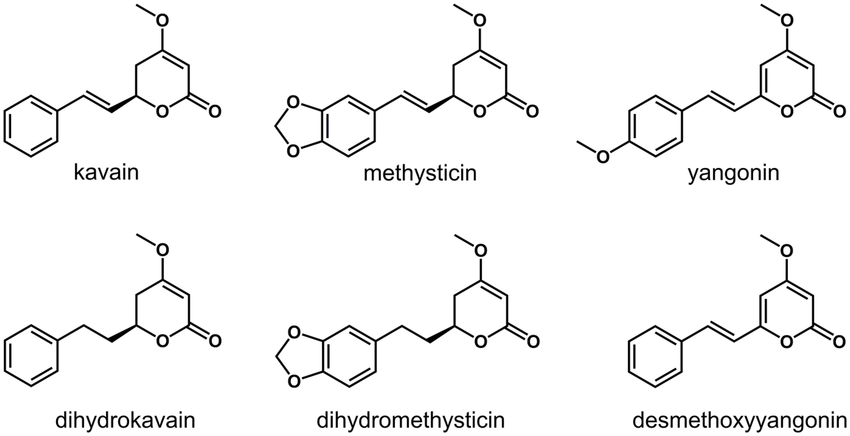
The published literature offers little help. Reported aqueous kavalactone recoveries span from under 5% to over 50%, and the classic Fijian work of Duve and Prasad reported figures from 22–29% to 81–83% depending on conditions. Much of that variance is now understood to reflect whether particle-associated material was filtered out before analysis rather than any genuine difference in extraction. Aqueous solubility data for the individual kavalactones exist and vary by more than an order of magnitude between compounds, which is the basis for expecting differential rather than uniform behaviour. But we are not aware of a published study that varies extraction pH on a common material and measures the outcome by full mass balance.
How it was done
Three cultivars — Kali-ISA, Kali-Rogu and Kali-Hiwa — were grown in the American Kava Association research greenhouse in Sacramento, California, and harvested at three years of age. Roots and rhizomes were washed, homogenized on a Robot Coupe CL60 with a grating disc, flash-frozen at −20 °C and stored until use. Botanical identity of all three was confirmed by HPTLC against authenticated Piper methysticum references and reported in White Paper No. 2; no new authentication work was performed for this study and none is claimed. All three cultivars are represented here by first-material lots, and the Kali-Hiwa material was a lateral-root preparation.
Nine preparations were made: three cultivars × three initial water pH values. Each cell of that design is a single run. There are no replicates at any condition. This is the governing limitation of the paper and it is not recoverable by analysis. A single run cannot separate a pH effect from run-to-run process variation, and No. 2 measured that process variation directly: coefficients of variation on marc dry weight of 4.9% for Kali-ISA, 4.6% for Kali-Rogu and 20.2% for Kali-Hiwa. Differences of the size reported here are comfortably inside the Kali-Hiwa process-variation envelope and only marginally outside the Kali-ISA one. Every result below should be read as a measurement of what these nine specific preparations did, not as an estimate of what pH does.
Filtered municipal tap water from Rancho Cordova, California (native pH 8.0) was used throughout, warmed to 38 °C. For the pH 6.0 and pH 5.0 conditions the water was adjusted with USP-grade citric acid before the plant material was added, and pH was measured on each batch with an Apera PH20 meter calibrated against NIST-traceable buffers.
Two things to be plain about — pH was set on the water, not controlled thereafter. The plant material has its own buffering capacity, so the pH of the slurry during maceration was not the nominal figure and was not recorded. The conditions are therefore initial water pH — which is what a preparer actually controls — and not extraction pH. And citric acid is not an inert proton source. It is a chelator and a polar co-solute, so any difference attributed here to acidity could in part be an effect of citrate. Separating the two would require a mineral-acid comparator, which was not run.
The extraction protocol followed No. 2. Frozen homogenate was thawed at 23 °C until fully malleable, combined with pH-adjusted water at 38 °C, macerated in a Vitamix 5200 on high for 30 seconds, transferred to a 150 µm nylon straining bag and kneaded by hand until flow slowed to roughly one drop per second. The cycle was repeated three times with fresh water and the filtrates combined. All nine runs were prepared at the same scale: 114 g of frozen homogenate to a measured 1000 mL of finished beverage, a root-to-beverage ratio of 114 g L⁻¹, with every per-serving figure normalized to 125 mL. For Kali-Hiwa the basis is confirmed gravimetrically: recovered beverage solids are 24.64 g per 1000 mL at pH 8 against a starting dry weight of 31.9 g.
Spent root — the marc — was dried at 38 °C for 48 hours to ≤ 3.0% residual moisture, weighed and submitted for assay. All assays were performed by Flora Research Laboratories by HPLC with ultraviolet detection on an Agilent 1200 RRLC, using the single-laboratory validated procedure of Liu and colleagues, with calibration across eight points from 5 to 250 µg/mL at R² ≥ 0.999. Reported values are the mean of duplicate injections.
No statistics are reported — With one run per condition there are no degrees of freedom for error, and any test would have to borrow them from somewhere they do not belong. In particular the three cultivars are not replicates of one another and cannot be pooled as replicates of a pH treatment, so no analysis of variance is reportable on this design. Differences below are reported as measured values with their magnitudes stated, and nothing is described as significant. An earlier draft of this dataset reported ANOVA results; those tests treated the three cultivars as replicates of a pH treatment, which they are not, and they are withdrawn.
Table 1. Starting materials, as reported on the signed Flora Research Laboratories analytical reports. All three are first-material lots. DW₀ is the dry weight of starting material per run; beverage volume is the measured finished volume.
- Kali-ISA (LOT#KI-R) — Total KL (%): 8.98 · Total FK (%): 0.242 · Chemotype: 256431 · DW₀ (g): 24.3 · Bev. (mL): 1000 · FRL job: J25-0930-H
- Kali-Rogu (LOT#KR-R) — Total KL (%): 10.5 · Total FK (%): 0.175 · Chemotype: 423561 · DW₀ (g): 20.6 · Bev. (mL): 1000 · FRL job: J25-0930-H
- Kali-Hiwa (LOT#KH-RM, laterals) — Total KL (%): 10.7 · Total FK (%): 0.234 · Chemotype: 463251 · DW₀ (g): 31.9 · Bev. (mL): 1000 · FRL job: J26-0223-L
The three lots differ substantially in strength and profile. All are beverage grade with low flavokavain content.
The gravimetric weakness, stated up front
The particle/non-particulate split depends entirely on one measured quantity: marc dry mass. An error in that one number moves the partition figures further than anything else in this paper, so the weights are stated here rather than left implicit. Every marc weight used is the bench weight recorded at the time of drying: Kali-ISA 9.50, 9.90 and 9.70 g at pH 8, 6 and 5; Kali-Rogu 6.80, 8.10 and 7.00 g; Kali-Hiwa 8.17, 9.82 and 8.54 g. Those nine weights, with the starting dry weights in Table 1 and the assayed percentages on the signed reports, are enough to reproduce every figure in this paper. A one-gram error in any of them would move that cultivar's extraction efficiency by roughly three to five percentage points and its partition split considerably further.
Kali-Hiwa carries an independent check on its own weights, because it is the cultivar whose finished beverage was also dried and weighed: marc plus recovered beverage solids can be compared against the starting dry weight. On the recorded marcs that comparison closes to −2.9% at pH 8, −9.8% at pH 6 and −2.3% at pH 5. The pH 6 run, whose marc is 15–20% heavier than the other two, is the weakest run in the study on that criterion. Its beverage assays say the same thing from another direction: the pH 5 and pH 8 beverages carry the same total kavalactone content to three significant figures (11.0% of dried solids) but differ in distribution, with more kavain and dihydrokavain and less methysticin at pH 5 — which is what independent runs of the same material at different acidity should look like.
An erratum to White Paper No. 2 — The Kali-Hiwa pH 8 arm of this study is the same physical preparation reported in No. 2 as the Kali-Hiwa laterals single run. Its gram figures were tabulated there on a four-fold basis (DW₀ 127.6 g, marc 32.68 g); the correct values, used throughout here, are DW₀ 31.9 g and marc 8.17 g. Because every result in No. 2 is expressed as a ratio, none of its reported percentages, efficiencies or partition figures is affected. That run is not independent of No. 2 and is not counted here as new validation evidence.
A second correction belongs at the top rather than in a footnote, because it retracts a claim. An earlier working draft of this dataset reported that pH shifted beverage chemotype — Kali-Rogu moving from 423561 to 432615 at pH 6 and 436251 at pH 5, Kali-Hiwa from 462351 to 643251 — and concluded from those shifts that pH could be used to tune the profile of the drink. Those rank strings were computed against raw-material values that appear on no signed report for these lots: a Kali-Rogu profile totalling 10.185% where the signed report for LOT#KR-R gives 10.5% with a materially different distribution, and a Kali-Hiwa profile totalling 2.825% where the signed report for LOT#KH-RM gives 10.7%. Recomputed against the signed values, the shifts vanish. pH does not tune beverage chemotype, and the claim that it does should not be repeated.
What the correction protects — Extraction efficiency and chemotype are much less exposed to marc mass than the partition estimates are. Chemotype rank strings are computed from relative abundances within a fraction and are essentially unaffected by marc mass — which is why the chemotype result is the one we are most confident in.
One further note on terminology. The non-particulate fraction (NPF) reported below is a residual, not a measurement: it is what is left after modelled particle-associated kavalactone is subtracted from measured beverage kavalactone, and it therefore absorbs genuinely dissolved kavalactone, colloidal and emulsified material fine enough to pass 150 µm, and accumulated error. Calling it “water-soluble” would be wrong. An earlier working draft called it the “water-solubilized fraction”; that name has been retired here, in line with No. 2.
Chemotype: nine runs, nine matches
This is the central result of the paper and the one least vulnerable to its weaknesses. The bulk beverage chemotype matched the raw-root chemotype in every one of the nine preparations, at every pH. Kali-ISA gave 256431 in the root and 256431 in the beverage at pH 8, pH 6 and pH 5. Kali-Rogu gave 423561 throughout. Kali-Hiwa gave 463251 throughout. Not one rank position moved.
A rank string is only as good as the raw-material assay it is computed against. Every string here is computed against the signed report for the lot in question — LOT#KI-R at 8.98% total kavalactone, LOT#KR-R at 10.5% and LOT#KH-RM at 10.7% — and on those values no cultivar changed rank string at any pH. Rank strings computed against raw-material figures for which no signed report exists are not comparable to these and are not evidence of a pH effect.
The marc and non-particulate fractions did diverge from the bulk, in the directions No. 2 found. Marcs were enriched in the less mobile compounds. The non-particulate fraction moved the other way: in eight of the nine runs it placed kavain and dihydrokavain in its top two positions regardless of the cultivar's own profile, reproducing under three water conditions what No. 2 observed under one. The single exception is Kali-Rogu at pH 6 — which is also the run whose non-particulate fraction is largest and most exposed to gravimetric uncertainty.
Table 2. Chemotype rank strings by cultivar, fraction and initial water pH. Digits: 1 desmethoxyyangonin, 2 dihydrokavain, 3 yangonin, 4 kavain, 5 dihydromethysticin, 6 methysticin, descending by abundance.
- Kali-ISA — Raw root: 256431 · pH: 8.0 · Bulk beverage: 256431 · Marc: 254631 · Non-particulate fraction: 256431
- Kali-ISA — Raw root: 256431 · pH: 6.0 · Bulk beverage: 256431 · Marc: 254631 · Non-particulate fraction: 256431
- Kali-ISA — Raw root: 256431 · pH: 5.0 · Bulk beverage: 256431 · Marc: 256431 · Non-particulate fraction: 256431
- Kali-Rogu — Raw root: 423561 · pH: 8.0 · Bulk beverage: 423561 · Marc: 423651 · Non-particulate fraction: 243561
- Kali-Rogu — Raw root: 423561 · pH: 6.0 · Bulk beverage: 423561 · Marc: 423651 · Non-particulate fraction: 423561
- Kali-Rogu — Raw root: 423561 · pH: 5.0 · Bulk beverage: 423561 · Marc: 423651 · Non-particulate fraction: 243561
- Kali-Hiwa — Raw root: 463251 · pH: 8.0 · Bulk beverage: 463251 · Marc: 463521 · Non-particulate fraction: 426531
- Kali-Hiwa — Raw root: 463251 · pH: 6.0 · Bulk beverage: 463251 · Marc: 463251 · Non-particulate fraction: 426351
- Kali-Hiwa — Raw root: 463251 · pH: 5.0 · Bulk beverage: 463251 · Marc: 463251 · Non-particulate fraction: 426351
The bulk beverage column reproduces the raw-root column in all nine rows.
Yield: a real effect, on one cultivar out of three
Extraction efficiency by cultivar and initial water pH
Kali-ISA is the only cultivar with a monotonic pH response. Kali-Rogu spans one percentage point across the entire range. The composite bars average over three materials that behaved differently and should not be read as an optimum.
- Kali-ISA — pH 8.0: 82.1 % · pH 6.0: 85.1 % · pH 5.0: 88.3 %
- Kali-Rogu — pH 8.0: 84.3 % · pH 6.0: 83.8 % · pH 5.0: 83.3 %
- Kali-Hiwa — pH 8.0: 78.6 % · pH 6.0: 74.8 % · pH 5.0: 79.4 %
- Composite — pH 8.0: 81.7 % · pH 6.0: 81.2 % · pH 5.0: 83.7 %
Percentage of the kavalactone mass in the starting material that reached the beverage. Every value is a single run.
Total extraction efficiency across all nine runs spanned 74.8% to 88.3%. Every run recovered the majority of available kavalactone — consistent with No. 2, and far above the low aqueous recoveries that still circulate as rules of thumb.
pH moved the figure in one cultivar and not in the others. Kali-ISA rose steadily as the water was acidified, from 82.1% at pH 8 to 85.1% at pH 6 to 88.3% at pH 5, a gain of just over six percentage points and the only monotonic response in the set. Kali-Rogu was flat: 84.3%, 83.8% and 83.3%, a total span of one percentage point with a slight decline toward acidity that is well inside anything this design could resolve. Kali-Hiwa was non-monotonic, lowest at pH 6 (74.8%) and highest at pH 5 (79.4%), with pH 8 between them.
Averaged across the three cultivars the composite means were 81.7%, 81.2% and 83.7% — a total span of 2.5 percentage points, and not monotonic. The spread between cultivars at a single pH runs from 5.7 points at pH 8 to 10.3 points at pH 6. The composite curve should not be read as an optimum: it is an average over three materials that behaved differently, dominated by the one cultivar that responded, and neither a mild pH 6 maximum nor a smooth acid-favouring gradient is a feature of these data.
How much of this could be a weighing error? — Reversing Kali-ISA's ordering — making its pH 5 run no better than its pH 8 run — would require the pH 5 marc to have weighed 14.77 g rather than the recorded 9.70 g, an error of 52%. Reversing Kali-Hiwa's pH 5 against pH 8 ordering would require only a 4% error, so those two runs are not separable, and erasing its pH 6 dip would take an error of 15–18%. Reversing Kali-Rogu's nominal ordering would require only 6%, which is to say Kali-Rogu has no resolvable ordering at all: its three runs are indistinguishable, and that is the correct reading of them. The Kali-ISA trend is the one result here robust to any plausible gravimetric mistake.
Table 3. Extraction efficiency, marc retention, dry-matter pass-through and per-serving potency by cultivar and initial water pH. Every cell is a single run.
- Kali-ISA — pH: 8.0 · Marc dry mass (g): 9.50 · Pass-through fₚ (%): 60.9 · Extraction efficiency (%): 82.1 · Marc retention (%): 17.9 · Total KL per 125 mL (mg): 224
- Kali-ISA — pH: 6.0 · Marc dry mass (g): 9.90 · Pass-through fₚ (%): 59.3 · Extraction efficiency (%): 85.1 · Marc retention (%): 14.9 · Total KL per 125 mL (mg): 232
- Kali-ISA — pH: 5.0 · Marc dry mass (g): 9.70 · Pass-through fₚ (%): 60.1 · Extraction efficiency (%): 88.3 · Marc retention (%): 11.7 · Total KL per 125 mL (mg): 241
- Kali-Rogu — pH: 8.0 · Marc dry mass (g): 6.80 · Pass-through fₚ (%): 67.0 · Extraction efficiency (%): 84.3 · Marc retention (%): 15.7 · Total KL per 125 mL (mg): 228
- Kali-Rogu — pH: 6.0 · Marc dry mass (g): 8.10 · Pass-through fₚ (%): 60.7 · Extraction efficiency (%): 83.8 · Marc retention (%): 16.2 · Total KL per 125 mL (mg): 226
- Kali-Rogu — pH: 5.0 · Marc dry mass (g): 7.00 · Pass-through fₚ (%): 66.0 · Extraction efficiency (%): 83.3 · Marc retention (%): 16.7 · Total KL per 125 mL (mg): 225
- Kali-Hiwa — pH: 8.0 · Marc dry mass (g): 8.17 · Pass-through fₚ (%): 74.4 · Extraction efficiency (%): 78.6 · Marc retention (%): 21.4 · Total KL per 125 mL (mg): 334
- Kali-Hiwa — pH: 6.0 · Marc dry mass (g): 9.82 · Pass-through fₚ (%): 69.2 · Extraction efficiency (%): 74.8 · Marc retention (%): 25.2 · Total KL per 125 mL (mg): 317
- Kali-Hiwa — pH: 5.0 · Marc dry mass (g): 8.54 · Pass-through fₚ (%): 73.2 · Extraction efficiency (%): 79.4 · Marc retention (%): 20.6 · Total KL per 125 mL (mg): 337
- Composite — pH: 8.0 · Marc dry mass (g): 8.16 · Pass-through fₚ (%): 67.4 · Extraction efficiency (%): 81.7 · Marc retention (%): 18.3 · Total KL per 125 mL (mg): 262
- Composite — pH: 6.0 · Marc dry mass (g): 9.27 · Pass-through fₚ (%): 63.1 · Extraction efficiency (%): 81.2 · Marc retention (%): 18.8 · Total KL per 125 mL (mg): 258
- Composite — pH: 5.0 · Marc dry mass (g): 8.41 · Pass-through fₚ (%): 66.4 · Extraction efficiency (%): 83.7 · Marc retention (%): 16.3 · Total KL per 125 mL (mg): 268
Composite rows are unweighted means of the three cultivars. Composite marc dry mass is meaningful because all nine runs were prepared at the same scale; composite per-serving potency averages three lots of differing strength and describes only these nine preparations.
Marc retention is the mirror image and remains substantial. Between 11.7% and 25.2% of the starting kavalactone stayed in the spent root. Acidification reduced retention in Kali-ISA (17.9% to 11.7%), moved it marginally the wrong way in Kali-Rogu (15.7% to 16.7%), and did not act consistently in Kali-Hiwa.
pH does not rearrange the individual kavalactones
Per-analyte extraction efficiencies moved with pH in step with the totals rather than independently. In seven of the nine runs dihydrokavain was the most completely extracted compound, and in seven of the nine desmethoxyyangonin was the least — an ordering that tracks published aqueous solubility. The exceptions are named rather than smoothed over: yangonin was the best-extracted compound in the two Kali-ISA runs at pH 8 (83.5% against 81.9% for dihydrokavain) and pH 6 (85.9% against 85.4%), while the least completely extracted compound was methysticin in Kali-Hiwa at pH 8 (76.8% against 77.3% for desmethoxyyangonin) and yangonin in Kali-Hiwa at pH 5 (77.7% against 78.3%). In every exception the two compounds involved lie within 1.6 percentage points of one another, so the departures are small against the 5.7-to-10.3-point spread between cultivars.
The spread between the best- and worst-extracted compound within a run was narrow throughout: 2.4 points for Kali-ISA at pH 8, 4.5 points at pH 5, 2.6 points for Kali-Rogu at pH 8, and 5.7 points for Kali-Hiwa at pH 8. Nothing in this dataset shows pH selectively mobilizing one kavalactone against another. Whatever pH is doing, it is acting on the whole matrix roughly uniformly.
Table 4. Extraction efficiency by individual kavalactone (%). M methysticin, DHM dihydromethysticin, K kavain, DK dihydrokavain, Y yangonin, DMY desmethoxyyangonin.
- Kali-ISA — pH: 8.0 · M: 82.4 · DHM: 82.4 · K: 81.1 · DK: 81.9 · Y: 83.5 · DMY: 81.1 · Total: 82.1
- Kali-ISA — pH: 6.0 · M: 85.5 · DHM: 85.4 · K: 83.8 · DK: 85.4 · Y: 85.9 · DMY: 82.7 · Total: 85.1
- Kali-ISA — pH: 5.0 · M: 87.7 · DHM: 88.5 · K: 87.8 · DK: 89.6 · Y: 87.6 · DMY: 85.1 · Total: 88.3
- Kali-Rogu — pH: 8.0 · M: 83.5 · DHM: 84.1 · K: 84.0 · DK: 85.6 · Y: 84.5 · DMY: 83.0 · Total: 84.3
- Kali-Rogu — pH: 6.0 · M: 83.0 · DHM: 83.6 · K: 83.4 · DK: 84.8 · Y: 84.5 · DMY: 82.6 · Total: 83.8
- Kali-Rogu — pH: 5.0 · M: 82.8 · DHM: 83.3 · K: 83.0 · DK: 84.5 · Y: 83.8 · DMY: 80.6 · Total: 83.3
- Kali-Hiwa — pH: 8.0 · M: 76.8 · DHM: 78.1 · K: 79.8 · DK: 82.5 · Y: 76.9 · DMY: 77.3 · Total: 78.6
- Kali-Hiwa — pH: 6.0 · M: 74.1 · DHM: 75.2 · K: 74.8 · DK: 77.5 · Y: 73.8 · DMY: 73.3 · Total: 74.8
- Kali-Hiwa — pH: 5.0 · M: 78.1 · DHM: 79.6 · K: 80.2 · DK: 82.5 · Y: 77.7 · DMY: 78.3 · Total: 79.4
What actually reaches the cup
Total kavalactone per 125 mL serving
The practical scale of the argument. Acidifying moved Kali-ISA by 17 mg per serving and Kali-Rogu by 3 mg. The gap between cultivars is roughly a hundred milligrams.
- Kali-ISA — pH 8.0: 224 mg · pH 6.0: 232 mg · pH 5.0: 241 mg
- Kali-Rogu — pH 8.0: 228 mg · pH 6.0: 226 mg · pH 5.0: 225 mg
- Kali-Hiwa — pH 8.0: 334 mg · pH 6.0: 317 mg · pH 5.0: 337 mg
All values normalized to a 125 mL serving. Single run per value.
A gain of just over six percentage points from alkaline to acidified water in Kali-ISA is worth having — on that lot it is the difference between 224 mg and 241 mg in a 125 mL serving — but it is not the difference between a weak drink and a strong one. Kali-Rogu, prepared identically, returned 228, 226 and 225 mg across the entire pH range: three numbers that are for practical purposes the same number. Kali-Hiwa moved, but not in a direction that describes a dose-response. A preparer choosing between cultivars is making a far larger decision than a preparer choosing between waters, and against the levers identified in No. 2 — mesh aperture, grind fineness, kneading energy, cycle count — pH is a trim adjustment at best.
Why would one cultivar respond and another not at all? The honest answer is that this dataset cannot say, and that the plausible mechanism is not about the kavalactones. The per-analyte results show pH acting on the whole matrix roughly uniformly rather than selectively mobilizing particular compounds — in Kali-Rogu, five of the six analytes shift by no more than 1.1 percentage points across the entire pH range, and the sixth, the least abundant, by 2.4. That points away from a direct effect on kavalactone solubility and toward an effect on the plant matrix: how readily cell-wall material fragments, how fine solids aggregate, how much passes a 150 µm mesh. Cultivars differ in starch content, root-to-rhizome ratio and fibre structure, and these traits vary with genotype, plant age and growing site, so a matrix-mediated pH effect would reasonably be present in some materials and absent in others. That is a hypothesis this study generates and cannot test. Testing it would mean measuring particle size distribution and slurry pH directly, and separating citrate effects from proton effects with a mineral-acid comparator.
Phase partitioning: pH moves it, but not out of the suspension regime
Non-particulate fraction of delivered kavalactone
Cultivar dominates pH by a wide margin. The largest within-cultivar swing is 7.0 points; the gap between Kali-Hiwa and Kali-ISA at a common pH reaches 24 points. At every condition tested, the majority of delivered kavalactone remained particle-associated.
- Kali-ISA — pH 8.0: 25.8 % · pH 6.0: 30.4 % · pH 5.0: 31.9 %
- Kali-Rogu — pH 8.0: 20.6 % · pH 6.0: 27.6 % · pH 5.0: 20.8 %
- Kali-Hiwa — pH 8.0: 5.4 % · pH 6.0: 7.5 % · pH 5.0: 7.8 %
NPF is a modelled residual, not a direct measurement. See the sensitivity band in Table 6.
The non-particulate fraction ranged from 5.4% to 31.9% of delivered kavalactone across the nine runs. Within each cultivar, pH moved it: Kali-ISA rose from 25.8% at pH 8 to 31.9% at pH 5; Kali-Rogu sat near 20.7% at both pH 8 and pH 5 with an excursion to 27.6% at pH 6; Kali-Hiwa was low throughout and rose slightly with acidity. Kali-Hiwa's very low values are consistent with No. 2, which reported 97.2% particle-associated delivery for that cultivar and identified it as the lot with the poorest gravimetric closure and the highest process variability.
The direction of the pH effect is what the matrix chemistry would predict. Acidification of a plant slurry tends to increase pectin solubilization and reduce the aggregation of fine solids, both of which would push more material into the non-particulate residual. But only Kali-ISA showed a clean monotonic response, and the effect measured is in any case a shift within a suspension rather than a transition out of one. At every pH tested, in every cultivar, the majority of delivered kavalactone remained particle-associated — 68.1% at the lowest, 94.6% at the highest.
The practical consequence — Acidifying the water does not turn kava into a solution. Any method that filters or centrifuges a kava beverage and assays the clear phase will substantially understate delivered dose, and acidifying the preparation does not rescue it. The conclusion of No. 2 — that mesh aperture and grind, not water chemistry, are the dominant controls on beverage strength — is unchanged by this dataset and is reinforced by it.
Table 5. Partitioning of delivered kavalactone between the particle-associated fraction (KLₚ) and the non-particulate residual (NPF), as a percentage of the beverage total. Single run per cell.
- Kali-ISA — pH: 8.0 · KLₚ (%): 74.2 · NPF (%): 25.8 · NPF, M: 26.0 · NPF, K: 24.9 · NPF, DK: 25.6 · NPF, Y: 27.1
- Kali-ISA — pH: 6.0 · KLₚ (%): 69.6 · NPF (%): 30.4 · NPF, M: 30.7 · NPF, K: 29.3 · NPF, DK: 30.6 · NPF, Y: 31.0
- Kali-ISA — pH: 5.0 · KLₚ (%): 68.1 · NPF (%): 31.9 · NPF, M: 31.5 · NPF, K: 31.6 · NPF, DK: 32.9 · NPF, Y: 31.4
- Kali-Rogu — pH: 8.0 · KLₚ (%): 79.4 · NPF (%): 20.6 · NPF, M: 19.8 · NPF, K: 20.2 · NPF, DK: 21.7 · NPF, Y: 20.7
- Kali-Rogu — pH: 6.0 · KLₚ (%): 72.4 · NPF (%): 27.6 · NPF, M: 26.9 · NPF, K: 27.2 · NPF, DK: 28.4 · NPF, Y: 28.2
- Kali-Rogu — pH: 5.0 · KLₚ (%): 79.2 · NPF (%): 20.8 · NPF, M: 20.2 · NPF, K: 20.5 · NPF, DK: 21.9 · NPF, Y: 21.2
- Kali-Hiwa — pH: 8.0 · KLₚ (%): 94.6 · NPF (%): 5.4 · NPF, M: 3.1 · NPF, K: 6.8 · NPF, DK: 9.8 · NPF, Y: 3.3
- Kali-Hiwa — pH: 6.0 · KLₚ (%): 92.5 · NPF (%): 7.5 · NPF, M: 6.6 · NPF, K: 7.5 · NPF, DK: 10.7 · NPF, Y: 6.2
- Kali-Hiwa — pH: 5.0 · KLₚ (%): 92.2 · NPF (%): 7.8 · NPF, M: 6.2 · NPF, K: 8.6 · NPF, DK: 11.3 · NPF, Y: 5.8
How much of the partition result survives a weighing error
Marc mass is the sole driver of the split, and it is a single weighing per run with no replicate. Table 6 therefore recomputes the non-particulate fraction with marc mass scaled to 85% and 115% of the recorded value, so the partition estimates can be read with an explicit tolerance rather than on trust.
Table 6. Sensitivity of the non-particulate fraction (%) and extraction efficiency (%) to a ±15% error in recorded marc dry mass.
- Kali-ISA — pH: 8.0 · NPF, marc −15%: 21.3 · NPF, as recorded: 25.8 · NPF, marc +15%: 30.7 · Eff., marc −15%: 84.8 · Eff., marc +15%: 79.4
- Kali-ISA — pH: 6.0 · NPF, marc −15%: 25.2 · NPF, as recorded: 30.4 · NPF, marc +15%: 35.9 · Eff., marc −15%: 87.3 · Eff., marc +15%: 82.9
- Kali-ISA — pH: 5.0 · NPF, marc −15%: 26.6 · NPF, as recorded: 31.9 · NPF, marc +15%: 37.5 · Eff., marc −15%: 90.0 · Eff., marc +15%: 86.5
- Kali-Rogu — pH: 8.0 · NPF, marc −15%: 17.0 · NPF, as recorded: 20.6 · NPF, marc +15%: 24.3 · Eff., marc −15%: 86.7 · Eff., marc +15%: 82.0
- Kali-Rogu — pH: 6.0 · NPF, marc −15%: 22.8 · NPF, as recorded: 27.6 · NPF, marc +15%: 32.7 · Eff., marc −15%: 86.3 · Eff., marc +15%: 81.4
- Kali-Rogu — pH: 5.0 · NPF, marc −15%: 17.1 · NPF, as recorded: 20.8 · NPF, marc +15%: 24.6 · Eff., marc −15%: 85.8 · Eff., marc +15%: 80.8
- Kali-Hiwa — pH: 8.0 · NPF, marc −15%: 4.4 · NPF, as recorded: 5.4 · NPF, marc +15%: 6.5 · Eff., marc −15%: 81.8 · Eff., marc +15%: 75.4
- Kali-Hiwa — pH: 6.0 · NPF, marc −15%: 6.0 · NPF, as recorded: 7.5 · NPF, marc +15%: 9.1 · Eff., marc −15%: 78.6 · Eff., marc +15%: 71.0
- Kali-Hiwa — pH: 5.0 · NPF, marc −15%: 6.4 · NPF, as recorded: 7.8 · NPF, marc +15%: 9.3 · Eff., marc −15%: 82.5 · Eff., marc +15%: 76.3
Three things survive the band: Kali-Hiwa is the lowest cultivar at every scaling; the within-cultivar direction of the pH response is unchanged at every scaling; and particle-associated delivery dominates across the entire band, since even the most generous assumption leaves the non-particulate fraction below 38%. What does not survive is any specific percentage. The partition columns in Table 5 should be quoted with this band, or not quoted at all.
Does the mass-balance estimator still work when the water is acidified?
White Paper No. 2 validated the estimator against direct HPLC of the finished beverage at pH 8.0 only, and noted that as a limitation. Kali-Hiwa was assayed directly at all three pH conditions here, which tests the estimator outside the condition it was built on. It holds. Calculated and measured total kavalactone per 125 mL agreed to 1.3% at pH 8, 3.1% at pH 6 and 1.4% at pH 5 — a mean absolute relative difference of 1.9% (SD 1.0%, n = 3), sitting comfortably inside the 2.8% (SD 2.2%) reported across ten runs at pH 8 in No. 2.
Table 7. Kali-Hiwa: mass-balance-calculated against directly HPLC-measured total kavalactone per 125 mL, with gravimetric closure, at three initial water pH values.
- 8.0 — Beverage solids (g/125 mL): 3.08 · HPLC measured (mg): 338.2 · Mass balance (mg): 333.6 · Absolute difference (%): 1.3 · Closure gap (%): −2.9
- 6.0 — Beverage solids (g/125 mL): 3.15 · HPLC measured (mg): 307.8 · Mass balance (mg): 317.4 · Absolute difference (%): 3.1 · Closure gap (%): −9.8
- 5.0 — Beverage solids (g/125 mL): 3.01 · HPLC measured (mg): 332.2 · Mass balance (mg): 336.9 · Absolute difference (%): 1.4 · Closure gap (%): −2.3
- Mean — Beverage solids (g/125 mL): 3.08 · HPLC measured (mg): 326.1 · Mass balance (mg): 329.3 · Absolute difference (%): 1.9 ± 1.0 · Closure gap (%): −5.0
Computed from the signed reports of FRL job J26-0223-L on the recorded marc dry masses. The Mean row gives unweighted means, with the absolute difference as mean ± SD (n = 3).
Per-analyte agreement was tightest at pH 8, where no individual kavalactone differed by more than 3.2%. Both acidified runs were looser. At pH 6 the worst were yangonin and desmethoxyyangonin, both over-predicted by 7.8% — the two compounds present in smallest absolute quantity and therefore the most exposed to small errors in either measurement. At pH 5 the worst were methysticin, over-predicted by 8.0%, and dihydrokavain, under-predicted by 7.6%; those errors run in opposite directions, which is why the totals still agree to 1.4% and why the scatter reads as noise in the individual assays rather than a bias in the estimator.
Table 8. Kali-Hiwa: per-analyte agreement between mass-balance-calculated and directly HPLC-measured kavalactone per 125 mL. Each row is one analyte; values are absolute relative differences (%) by run, with pooled mean, standard deviation and coefficient of variation across the three runs (n = 3). M methysticin, DHM dihydromethysticin, K kavain, DK dihydrokavain, Y yangonin, DMY desmethoxyyangonin, FK flavokavains.
- M — pH 8: 0.1 · pH 6: 4.5 · pH 5: 8.0 · Pooled mean: 4.2 · Pooled SD: 4.0 · Pooled CV: 0.94
- DHM — pH 8: 1.1 · pH 6: 3.4 · pH 5: 3.9 · Pooled mean: 2.8 · Pooled SD: 1.5 · Pooled CV: 0.53
- K — pH 8: 2.0 · pH 6: 0.3 · pH 5: 3.2 · Pooled mean: 1.8 · Pooled SD: 1.5 · Pooled CV: 0.79
- DK — pH 8: 3.2 · pH 6: 0.7 · pH 5: 7.6 · Pooled mean: 3.8 · Pooled SD: 3.5 · Pooled CV: 0.91
- Y — pH 8: 0.4 · pH 6: 7.8 · pH 5: 6.7 · Pooled mean: 5.0 · Pooled SD: 4.0 · Pooled CV: 0.80
- DMY — pH 8: 1.2 · pH 6: 7.8 · pH 5: 5.1 · Pooled mean: 4.7 · Pooled SD: 3.3 · Pooled CV: 0.71
- Total KL — pH 8: 1.3 · pH 6: 3.1 · pH 5: 1.4 · Pooled mean: 1.9 · Pooled SD: 1.0 · Pooled CV: 0.52
- Total FK — pH 8: 6.5 · pH 6: 12.0 · pH 5: 6.6 · Pooled mean: 8.4 · Pooled SD: 3.1 · Pooled CV: 0.38
Two caveats — The pH 8 run is the run already reported in No. 2, so only two of these three comparisons are new evidence. And gravimetric closure was much poorer at pH 6 (−9.8%) than at pH 8 (−2.9%) or pH 5 (−2.3%); that run carries a recorded marc mass 15–20% heavier than the other two, which is the likeliest explanation both for its poorer closure and for its efficiency dip. The Kali-Hiwa pH 6 result should be treated as the least reliable run in the study.
What a preparer should actually do with this
These consequences follow from the measurements rather than from any particular interpretation of them, and they are offered at the confidence level of a version 1.0a paper: enough to inform a decision, not enough to settle an argument.
For preparers and kava bars
- Adjusting pH will not change the profile of what you are drinking. Nine out of nine preparations delivered the cultivar's own chemotype regardless of water pH. If you are acidifying in the belief that you are shifting the drink toward kavain, this dataset says you are not.
- Acidification may buy a little yield on some material and nothing on the rest. On one of three cultivars it was worth about six percentage points. On Kali-Rogu it was worth nothing measurable — three servings within 3 mg of each other across the whole range. On Kali-Hiwa it was inconsistent. If you want to know whether it helps with your material, the only way to find out is to test your material.
- It is still a suspension at every pH. Nothing tested here moved the drink out of the particle-dominated regime. Agitation before pouring remains a dose-control step, and grind and mesh remain the strength controls.
- The bag still holds a lot. Between about 12% and 25% of the starting kavalactone stayed in the marc across all nine runs, and acidifying the water is not a reliable way to get it out — it helped on one cultivar and did nothing on another.
For producers and standards work
- A pH specification is not a potency specification. Fixing extraction pH will not by itself make servings comparable between batches, because the pH effect is smaller than the cultivar and lot effects around it. A specification that fixes pH without also fixing grind, mesh, cycle count and agitation has fixed the least important variable.
- Chemotype claims survive preparation. For a producer selecting on chemotype this is good news and worth having measured: the profile reaching the drinker is the profile of the root, across the pH range a commercial kitchen would use.
- Liquid-phase-only assays remain wrong across the pH range. A method that assays the clear phase of a kava beverage captured between 5% and 35% of delivered kavalactone in these runs. Acidification does not fix that and mildly worsens the variability of it.
What this paper does not establish
It does not establish that pH has no effect on yield; it establishes that on these nine preparations the effect was confined to one cultivar, small where it appeared, and inconsistent in direction elsewhere. It does not establish an optimum pH, and the composite figures should not be used as one. It does not establish that the partition percentages in Table 5 are accurate — they should be read with the band in Table 6. It does not establish that the differences between cultivars are genetic rather than lot-level, since each cultivar is one lot. It does not separate acidity from citrate. It does not address taste, absorption, bioavailability or safety. And with one run per condition, it does not establish that any single number in it would reproduce.
Limitations and what comes next
- There is one run per condition. Nine preparations across nine cells give no estimate of run-to-run variation, and the process variation measured in No. 2 — up to 20.2% CV on marc dry weight for Kali-Hiwa — is large enough to account for most of the differences reported here. The replicated study needs a minimum of three independent runs per cultivar per pH, prepared in randomized order rather than in cultivar blocks.
- The gravimetric record is the weakest link. Marc mass was recorded once per run, by hand, and both the partition split and, to a lesser degree, extraction efficiency move directly with it. Future runs should record marc mass in duplicate, entered directly into the analysis sheet rather than transcribed, with the balance reading photographed.
- pH was set, not controlled. Slurry pH during maceration and final beverage pH were not measured, and plant material buffers. Without those measurements the dose-response axis of this study is only approximately defined.
- Citrate is confounded with acidity. Citric acid was the sole acidulant; it chelates and it is a polar co-solute. A hydrochloric or phosphoric acid comparator at matched pH would separate the two.
- Only three pH values were tested, none between 6.0 and 8.0, nothing below 5.0 or above 8.0.
- Two of the three cultivars are different material from White Paper No. 2. This study used first-material lots throughout; No. 2 built its triplicates on second-material lots for Kali-ISA and Kali-Rogu. Absolute values should not be compared across the two papers for those cultivars, and the pH 8 Kali-Hiwa arm is a run already reported in No. 2 rather than new evidence.
- The partition model remains indirect. KLₚ is inferred from gravimetric pass-through rather than measured, and NPF is a residual absorbing all upstream error. Direct fractionation — centrifuging the beverage and assaying pellet and supernatant separately at each pH — remains the single most valuable next experiment, exactly as No. 2 concluded.
- Nothing here addresses palatability, absorption or effect. pH changes taste, and taste governs what people actually drink. Neither that nor bioavailability was measured.
Disclosures and conflicts of interest
The authors declare the following interests, and readers should weigh the findings in light of them. All three authors are commercially engaged in the kava trade and are owners and operators of kava nurseries and kava businesses in California and Florida, which produce the American cultivars evaluated here. T.B. holds an ownership interest in Root of Happiness, which was the named client on the analytical reports commissioned for this study and which supported the work. J.B. is affiliated with Nakamal at Home and M.M. with Kavafied. The plant material was grown by T.B. in the American Kava Association research greenhouse. This paper is published by the American Kava Association and the authors are members of that organization. This work received no external grant funding; all materials, analytical services and laboratory costs were borne by the authors, with support from Root of Happiness Kava.
The authors stand to benefit commercially from favourable findings about American-grown kava and about the SWWE protocol. The principal finding of this paper is a negative one: it removes a commercially attractive claim rather than supporting one. The analytical data were produced by an independent accredited laboratory from samples submitted without any of the interpretations offered here, and the limitations section states plainly where the evidence is weakest, including the single-run design, the anomalous gravimetric record and the material differences against the authors' own prior publication. No comparison against any competing preparation method or apparatus was performed, and no claim of superiority over any other preparation method or device is made or supported here.
Use of generative artificial intelligence — During preparation of this paper the authors used Claude Opus 5 (Anthropic) to recompute the mass balance from the signed laboratory reports, construct the tables, run the sensitivity analysis, and check every tabulated value against the signed source documents. ChatGPT 5.2 (OpenAI) was used for grammar and language editing. All source values were taken from signed Flora Research Laboratories reports and verified by the authors against those reports. No data were generated, imputed or interpreted by generative artificial intelligence, and no substitute values were created for missing or doubtful measurements. The authors take full responsibility for the content.
References
- Blythe, T., Bowman, J., & Masifilo, M. (2026). Where the Kavalactones Go: A Mass Balance of the American Kava Beverage. American Kava Association Technical White Paper No. 2. — internally reviewed and audited by the authors; not externally peer reviewed. https://www.americankavaassociation.org/study/kavalactone-mass-balance
- Chua, H. C., Christensen, E. T. H., Hoestgaard-Jensen, K., Hartiadi, L. Y., Ramzan, I., Jensen, A. A., Absalom, N. L., & Chebib, M. (2016). Kavain, the major constituent of the anxiolytic kava extract, potentiates GABAA receptors: functional characteristics and molecular mechanism. PLoS ONE, 11(6), e0157700. https://doi.org/10.1371/journal.pone.0157700
- Duve, R. N., & Prasad, J. (1981). Quality evaluation of yaqona (Piper methysticum) in Fiji. Fiji Agricultural Journal, 43, 1–8.
- Duve, R. N., & Prasad, J. (1983). Changes in chemical composition of yaqona (Piper methysticum) with time. Fiji Agricultural Journal, 45, 45–50.
- Duve, R. N., & Prasad, J. (1984a). Efficacy of extraction of constituents in the preparation of yaqona beverage. Part 1: general constituents. Fiji Agricultural Journal, 46, 5–9.
- Duve, R. N., & Prasad, J. (1984b). Efficacy of extraction of constituents in the preparation of yaqona beverage. Part 2: major active constituents. Fiji Agricultural Journal, 46, 11–16.
- Lebot, V., Do, T. K. T., & Legendre, L. (2014). Detection of flavokavins (A, B, C) in cultivars of kava (Piper methysticum) using high performance thin layer chromatography (HPTLC). Food Chemistry, 151, 554–560. https://doi.org/10.1016/j.foodchem.2013.11.120
- Lebot, V., & Lévesque, J. (1989). The origin and distribution of kava (Piper methysticum Forst. f., Piperaceae): a phytochemical approach. Allertonia, 5, 223–281.
- Lebot, V., Michalet, S., & Legendre, L. (2019). Kavalactones and flavokavins profiles contribute to quality assessment of kava (Piper methysticum G. Forst.), the traditional beverage of the Pacific. Beverages, 5(2), 34. https://doi.org/10.3390/beverages5020034
- Liu, Y., Lund, J. A., Murch, S. J., & Brown, P. N. (2018). Single-lab validation for determination of kavalactones and flavokavains in Piper methysticum (kava). Planta Medica, 84(16), 1213–1218. https://doi.org/10.1055/a-0637-2400
- Mamallapalli, J., Henderson, A., Berthold, E., Yoon, S. L., Ray, D., Lowe, M., & Grundmann, O. (2026). Prevalence and use patterns of kava (Piper methysticum) in a US nationally representative sample. Journal of Ethnopharmacology, 355, 120617. https://doi.org/10.1016/j.jep.2025.120617
- Pont-Fernandez, S., Kheyfets, M., Rogers, J. M., Smith, K. E., & Epstein, D. H. (2023). Kava (Piper methysticum) in the United States: the quiet rise of a substance with often subtle effects. American Journal of Drug and Alcohol Abuse, 49(1), 85–96. https://doi.org/10.1080/00952990.2022.2140292
- Sarris, J., Stough, C., Bousman, C. A., Wahid, Z. T., Murray, G., Teschke, R., Savage, K. M., Dowell, A., Ng, C., & Schweitzer, I. (2013). Kava in the treatment of generalized anxiety disorder: a double-blind, randomized, placebo-controlled study. Journal of Clinical Psychopharmacology, 33(5), 643–648. https://doi.org/10.1097/JCP.0b013e318291be67
- Showman, A. F., Baker, J. D., Linares, C., Naeole, C. K., Borris, R., Johnston, E., Konanui, J., & Turner, H. (2015). Contemporary Pacific and Western perspectives on ʻawa (Piper methysticum) toxicology. Fitoterapia, 100, 56–67. https://doi.org/10.1016/j.fitote.2014.11.012
- Siméoni, P., & Lebot, V. (2002). Identification of factors determining kavalactone content and chemotype in kava (Piper methysticum Forst. f.). Biochemical Systematics and Ecology, 30(5), 413–424. https://doi.org/10.1016/S0305-1978(01)00093-X
- Singh, Y. N., & Singh, N. N. (2002). Therapeutic potential of kava in the treatment of anxiety disorders. CNS Drugs, 16(11), 731–743. https://doi.org/10.2165/00023210-200216110-00002
- Teschke, R., Genthner, A., & Wolff, A. (2009). Kava hepatotoxicity: comparison of aqueous, ethanolic, acetonic kava extracts and kava–herbs mixtures. Journal of Ethnopharmacology, 123(3), 378–384. https://doi.org/10.1016/j.jep.2009.03.038
- Teschke, R., & Lebot, V. (2011). Proposal for a kava quality standardization code. Food and Chemical Toxicology, 49(10), 2503–2516. https://doi.org/10.1016/j.fct.2011.06.075
- WHO/FAO Codex Alimentarius Commission. (2020). Regional Standard for Kava Products for Use as a Beverage When Mixed with Water (CXS 336R-2020). Codex Alimentarius.
Cite This
Blythe, T.; Bowman, J.; Masifilo, M. What pH Does, and Does Not, Do: Extraction Efficiency and Phase Partitioning in Acidified and Alkaline Short Warm-Water Kava Extraction. American Kava Association Technical White Paper No. 3, version 1.0a; American Kava Association: Las Vegas, NV, USA, 2026.
Supporting Data and Access
The records behind this paper are the signed HPLC analytical reports issued by Flora Research Laboratories under job identifiers J25-0930-H (aliquots 250930022-1-02, 250930023-1-02, 250930024-1-02, 250930025-1-02, 250930030-1-02, 250930031-1-02, 250930032-1-02, 250930033-1-02) and J26-0223-L (aliquots 260223037-1-01 through 260223043-1-01), covering all raw materials, marcs and, for Kali-Hiwa, finished beverages; the bench master table of frozen, dry and marc weights; and the mass-balance and sensitivity computations from which every table in this paper was derived. The HPTLC identity reports for all three cultivars are held with White Paper No. 2. All are available from the corresponding author on reasonable request.
The discussion published on this page is complete as an argument. It states the method, the numbers, the limitations and the conflicts of interest, and it is free to read, cite and disagree with. The records underneath it are held for the Association’s members.
Access to those records is open to stakeholders in the American kava growing industry — growers with at least one acre in production and a contract in place for the purchase of licensed planting material.
The reason is simply who this organization is. The American Kava Association is funded by its members and operates for their benefit, and its members are American kava farmers with land, capital and years committed to the crop. This work is self-funded: it was paid for out of working farms, to answer questions those farms were already facing. What the people who paid for it are owed is a working advantage in their own fields. So we publish the findings in full, limitations included, so the work can be judged on its merits — and we keep the underlying files inside the membership that produced them. That is a decision about who we are resourced to serve, not a judgement on anyone who asks.
Researchers and institutions interested in working with this material are welcome to propose a funded collaboration. That is the basis on which the Association can extend it, and we would rather say yes to a properly resourced study than no to a request.
Write to admin@americankavaassociation.org to enquire.