Overview
Develops an optimized aeroponic protocol for rooting tissue-cultured kava micro-cuttings, addressing the challenge of transitioning lab-propagated plants to field production. Reports rooting efficiency, root system architecture, and subsequent field performance compared to traditionally propagated material.
Abstract
Kava (Piper methysticum G. Forst.) is an obligate clonally propagated crop whose planting material supply is constrained by its dependence on woody nodal cuttings taken at harvest, a practice that reportedly yields 49–60% rooting over 6–8 weeks. We describe and evaluate a hybrid propagation protocol that combines soft-stem micro-cuttings excised from acclimatized Stage IV tissue-cultured plantlets with a modified aeroponic mist chamber, and that incorporates a defined air-pruning and lateral-branching conditioning sequence. Three independent first-generation propagation runs of 96 cuttings each were executed approximately four months apart (August 2025, December 2025, April 2026) using a single modified TurboKlone T48 unit fitted with double collars and a combined ultrasonic fogger–sprinkler delivery system. Across the three runs (288 cuttings), 277 (96.2%; 95% CI 93.3–97.9) rooted within 20 days and 266 (92.4%; 95% CI 88.7–94.9) met a pre-specified well-rooted threshold of ≥20 roots each ≥2 cm with visible branching, at a pooled mean of 46.2 ± 17.2 primary roots per well-rooted plant. Run-to-run variation in rooting success was negligible (95.8%, 95.8%, 96.9%; Fisher–Freeman–Halton exact p > 0.99). Following a 48-h pulsed fogger–sprinkler phase applied at Day 20 and an 8-d continuous-irrigation phase, every rooted plant exhibited arrest of primary root elongation with localized apical browning and subsequent lateral branching (277/277), producing a pooled mean of 34.2 ± 11.4 new lateral roots per well-rooted plant at a mean length of 1.84 ± 0.62 cm. Second-generation micro-cuttings harvested from first-generation propagules at Day 60 rooted at 95.1% (274/288; 95% CI 92.0–97.1), statistically indistinguishable from first-generation performance (difference 1.0 percentage points, 95% CI −2.3 to 4.4; Fisher's exact p = 0.68), supporting a repeating 60-day propagation cycle. Because the protocol was evaluated without a concurrent control arm and all cuttings within a run shared a single reservoir, the study establishes protocol feasibility and repeatability rather than the causal efficacy or relative superiority of any individual component; controlled comparisons are identified as the necessary next step.
Key Findings
- Rooting reached 96.2% within 20 days across three independent runs (277/288; 95% CI 93.3–97.9), with 92.4% (266/288) meeting a well-rooted threshold of at least 20 roots each 2 cm or longer with visible branching.
- Run-to-run variation was 1.1 percentage points across an eight-month window — 95.8% in August, 95.8% in December, 96.9% in April (Fisher–Freeman–Halton exact p > 0.99). Enclosing the root zone decouples propagation from external season.
- Well-rooted plants carried a pooled mean of 46.2 ± 17.2 primary roots at Day 20, ranging from 20 to 75. The distribution was strongly bimodal: across 277 rooted plants, none produced between 10 and 19 roots.
- After the 48-hour pulsed fogger–sprinkler phase and 8 days of continuous irrigation, all 277 rooted plants showed arrested primary elongation and lateral branching, adding a pooled mean of 34.2 ± 11.4 new laterals at a mean length of 1.84 ± 0.62 cm.
- Second-generation cuttings taken from first-generation propagules at Day 60 rooted at 95.1% (274/288), a 1.0-point difference from the first generation with a confidence interval spanning zero (−2.3 to 4.4; Fisher's exact p = 0.68). The cycle closes without measurable decay across one generational transition.
- A standing mother stock is still required. Between 15% and 17% of propagules had not developed a qualifying axillary shoot by Day 60, and 5 to 8 cuttings per cycle came from the original tissue-cultured mothers to hold throughput at 96.
- The design is single-arm. No cuttings were withheld from any element of the protocol, and all 96 within a run shared one reservoir. The study establishes that the protocol works and repeats; it does not isolate the contribution of any component, air pruning included.
How to read this paper — This is a protocol evaluation, not a controlled comparison. There was no untreated control arm and no cuttings were withheld from any element of the protocol. Every comparison to another method is against historical published figures from different studies, materials and assessors. The paper says so repeatedly, and so does this page.
Tissue culture solved multiplication. It never solved the handoff.
Kava cannot set viable seed, so every plant entering production is made vegetatively. The standard route — woody nodal cuttings taken at harvest — reportedly returns 49–60% establishment over 6–8 weeks, ties propagule supply to the harvest calendar, and spends saleable root material on every propagule taken.
In vitro micropropagation removes the harvest-cycle constraint, and regeneration systems for Piper methysticum have existed since 2008. Adoption stayed marginal anyway. The published protocols require sterile facilities and trained staff, and neither reports quantitative ex vitro acclimatization outcomes — which is the stage where micropropagated material is actually lost. In our own operations the transition from Stage III/IV plantlet to established plant, not in vitro multiplication, is what limits throughput and drives cost.
This study takes the output of tissue culture and puts it straight into a controlled aeroponic root zone, then conditions the resulting root system on purpose. It is the third study in the association's propagation series, after soft-stem cuttings in peat and basic aeroponics (White Paper No. 1) and outdoor air layering (White Paper No. 4), and it uses the same four-category rooting scale so the numbers stay comparable across all three.
Method
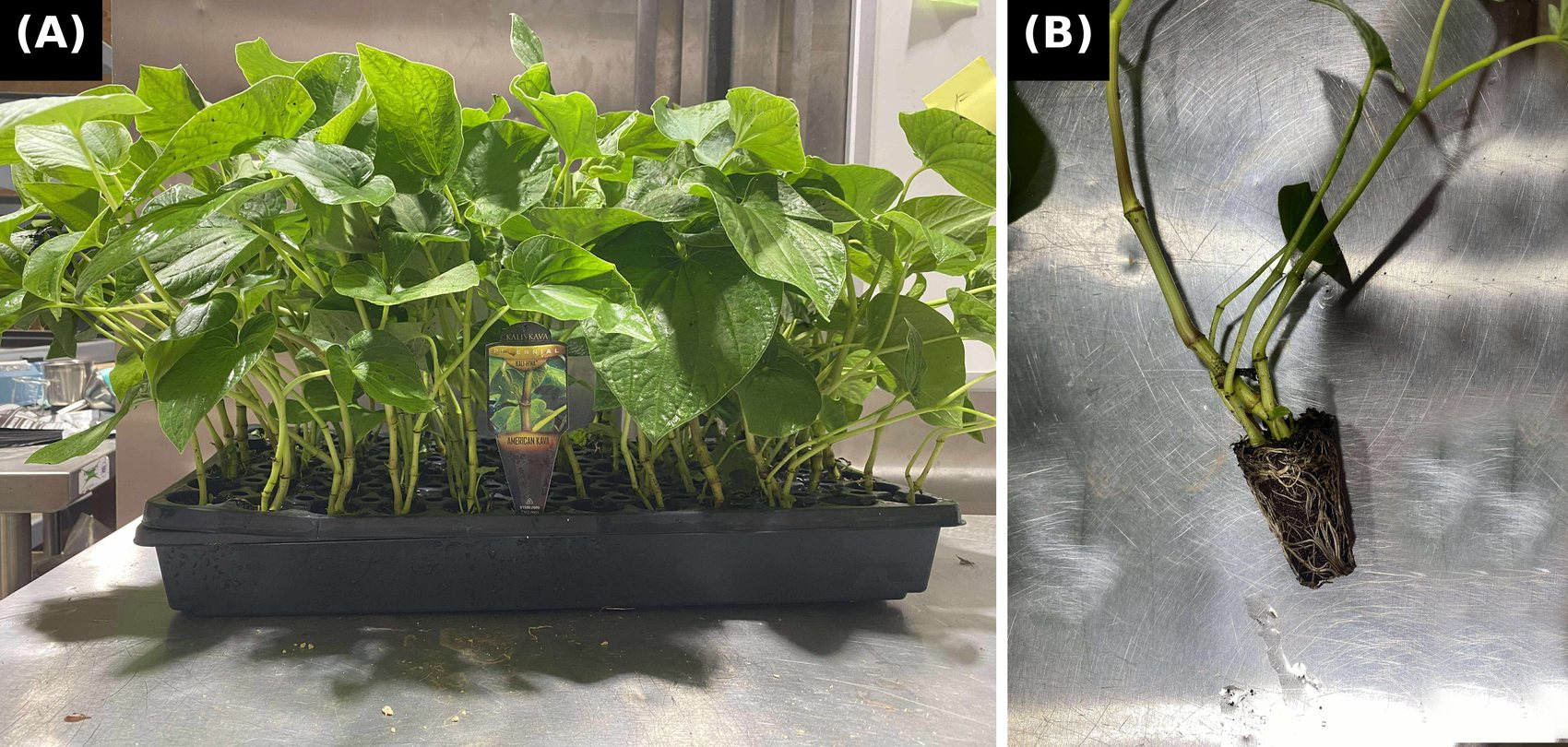
Plant material — Stage IV tissue-cultured Kali-Hiwa plantlets from the Kali Kava Research Facility, Sacramento, transferred from in vitro rooting medium to peat cubes roughly four months before each run and hardened under greenhouse conditions. Carryover from benzyladenine-supplemented Stage II medium left each hardened plantlet carrying 3–5 vigorous axillary shoots — the shoot material the cuttings come from. That carryover is normally treated as a nuisance in micropropagation; here it is the throughput mechanism.
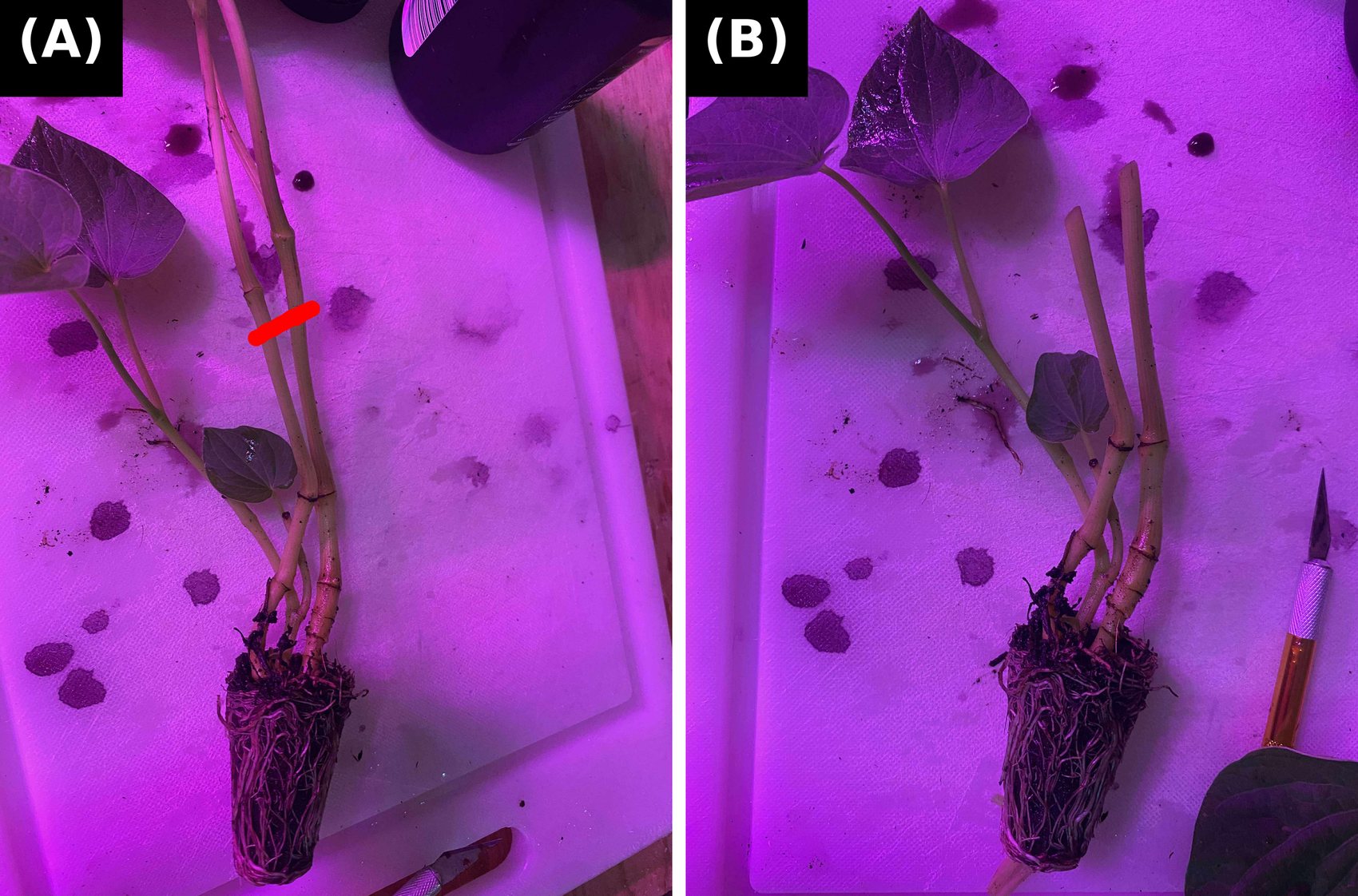
Micro-cuttings — Herbaceous, pliable stem segments that bend to about 90° without snapping. Selected on four criteria: 2.0–4.0 mm diameter at the basal cut, non-senescing tissue at full turgor, first to second node below the apical meristem, and at least one leaf retained. Cut at 45° immediately below the node with scalpels sterilized between cuts, dipped 1 minute in 0.31% IBA rooting gel, inserted without drying. Ninety-six per run.
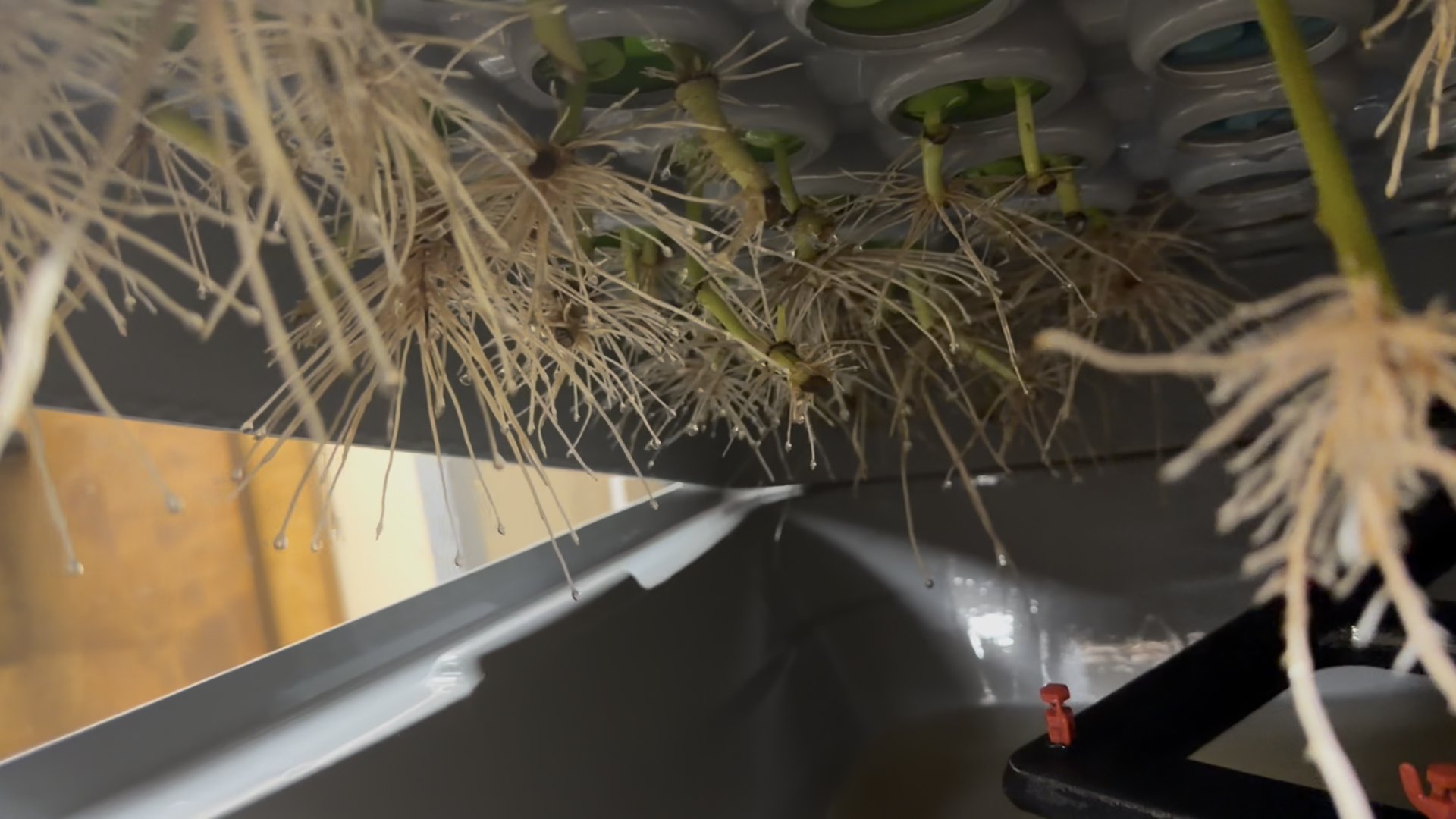
The system — A TurboKlone T48 with two modifications. Each of the 48 collar sites carries a double neoprene collar, giving 96 cuttings per run in one 0.5 m² footprint. The stock spray manifold runs alongside a 500 mL/hr single-head ultrasonic mister, so fine fog and direct spray reach the root zone at the same time. All wetted surfaces swabbed with 70% ethanol, soaked 15 minutes in 10% hypochlorite, rinsed three times in sterile RO water before each run.
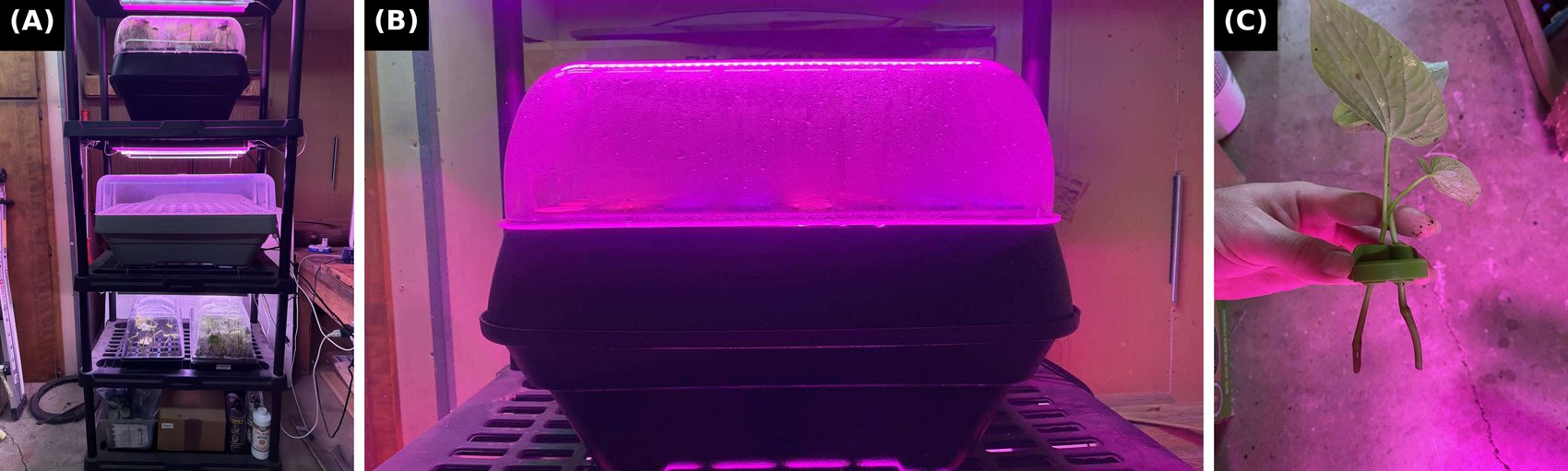
Nutrient and environment — Days 0–30 at 200 ppm TDS (EC 400 µS/cm), pH 5.8, with Bacillus amyloliquefaciens and a 2-2-4 NPK base, both at 2 mL/gal. Reservoir replaced at Day 30 and raised to 350 ppm (EC 700) for the vegetative phase. Air 20–26°C, reservoir 19 ± 1°C, 400 µmol/m²/s PPFD at canopy on 18/6.
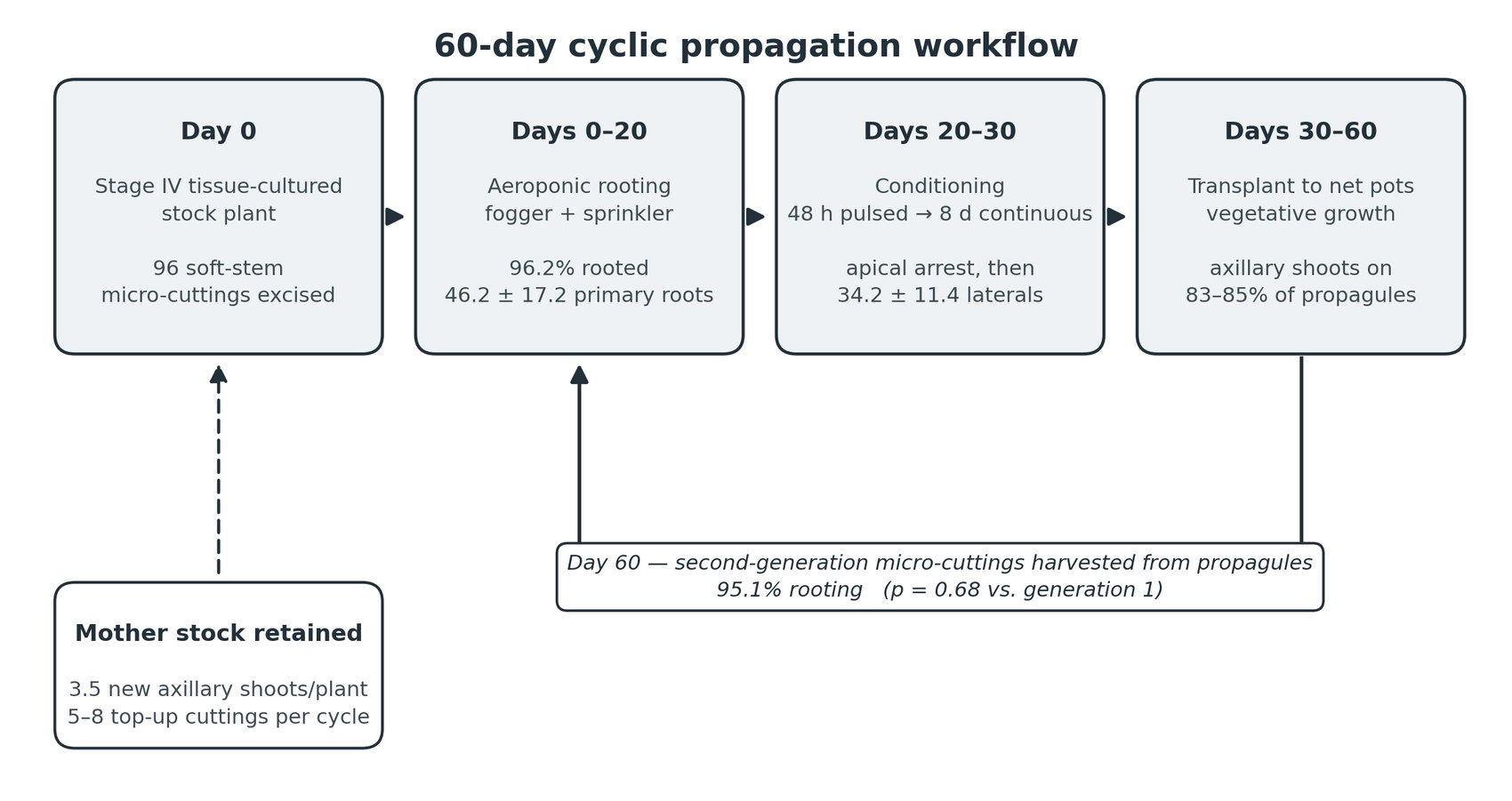
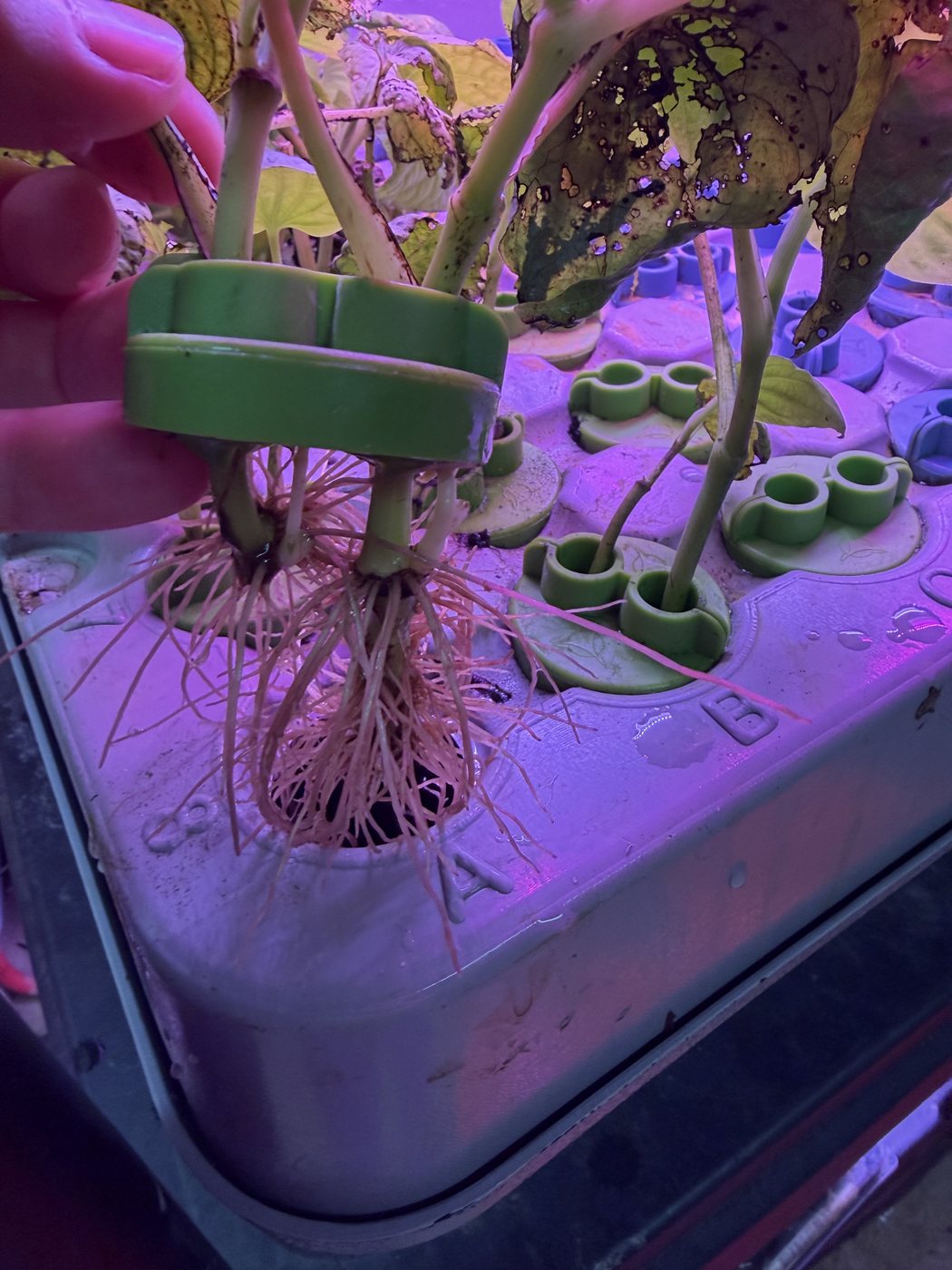
The conditioning sequence — At Day 20 all rooted plants move to a pulsed regime for 48 hours: 3–5 minutes of combined fog and spray, then 20–30 minutes of drying, repeatedly exposing root apices to air. The endpoint was pre-specified as cessation of primary root elongation with browning confined to the apices and no necrosis extending into the root axis. At Day 22 continuous irrigation resumes for 8 days to allow lateral branching. At Day 30 plants transfer to net pots with LECA for the balance of the cycle.
Scoring — Four mutually exclusive classes applied in order at Day 20: rotted; alive with no roots; poorly rooted (at least one visible root, aggregate length under 2 cm); well-rooted (aggregate length 2 cm or more, with at least 20 roots each 2 cm or longer and visible branching). A primary root is an axis emerging from the stem or basal cut, not a branch off an existing axis. Counts by digital caliper and manual count, by a single trained assessor, unblinded.
Note that the well-rooted bar here is far higher than in the earlier soft-stem work, which used at least 3 roots. The "well-rooted" percentages are therefore not comparable across the two papers. Total rooting frequency is.
Results
Rooting held at 96.2% across three runs spanning three seasons — 277 of 288 cuttings, 95% CI 93.3–97.9. Of those, 266 (92.4%) cleared the well-rooted bar, 11 (3.8%) were poorly rooted, 6 (2.1%) stayed alive without roots, and 5 (1.7%) rotted. Run rates were 95.8%, 95.8% and 96.9%; a Fisher–Freeman–Halton exact test across runs returns p > 0.99.
Well-rooted plants carried a pooled mean of 46.2 ± 17.2 primary roots at Day 20, ranging 20 to 75. Poorly rooted plants carried 8.6 ± 0.7. The distribution was strongly bimodal — across 277 rooted plants, not one produced between 10 and 19 primary roots. Cuttings either made fewer than ten short roots or more than twenty. We report that as observed. It may be a real threshold response, or it may be an artifact of counting a dense root mass with a 20-root criterion in mind; image-based quantification would settle it.
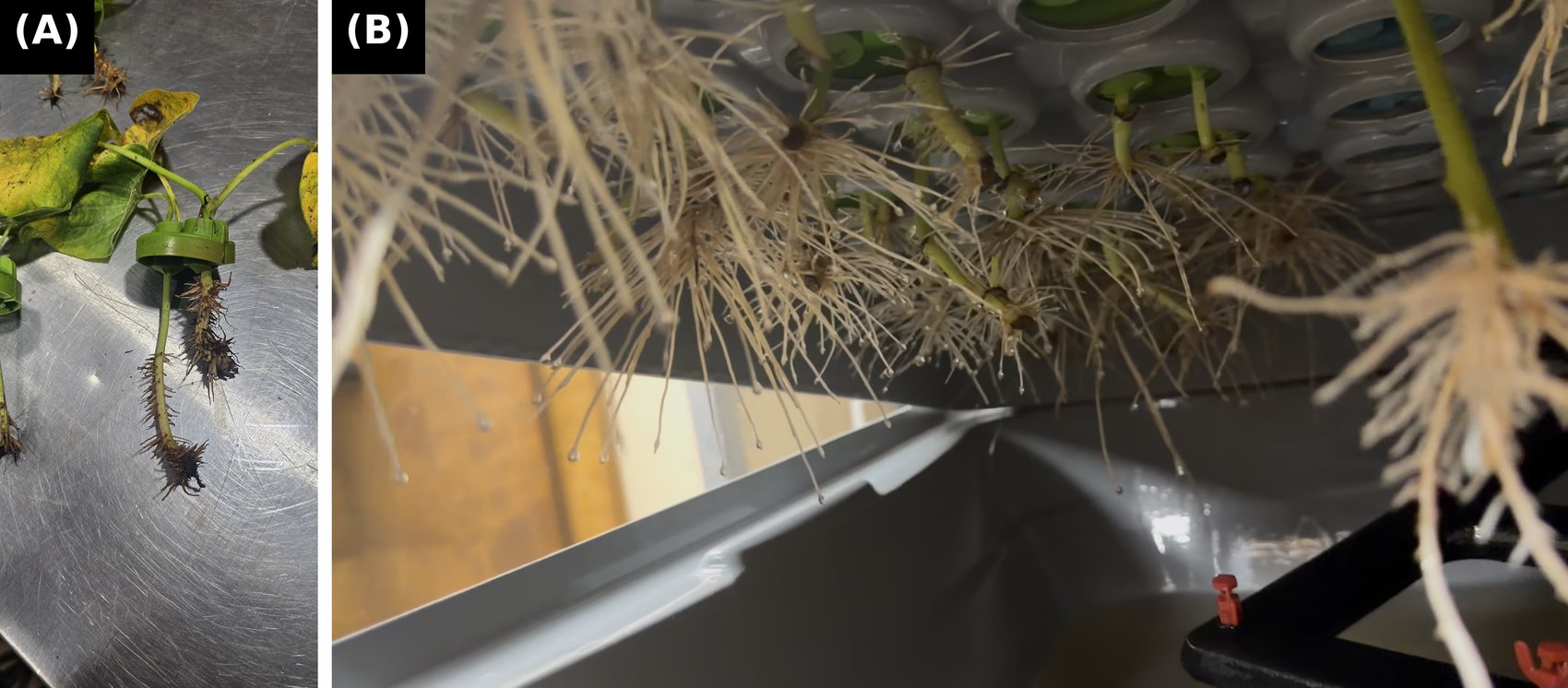
All 277 rooted plants met the conditioning endpoint and all showed lateral branching by Day 30, adding a pooled mean of 34.2 ± 11.4 new laterals at 1.84 ± 0.62 cm — markedly shorter than the pre-conditioning primaries, consistent with a shift from axial extension to branching.
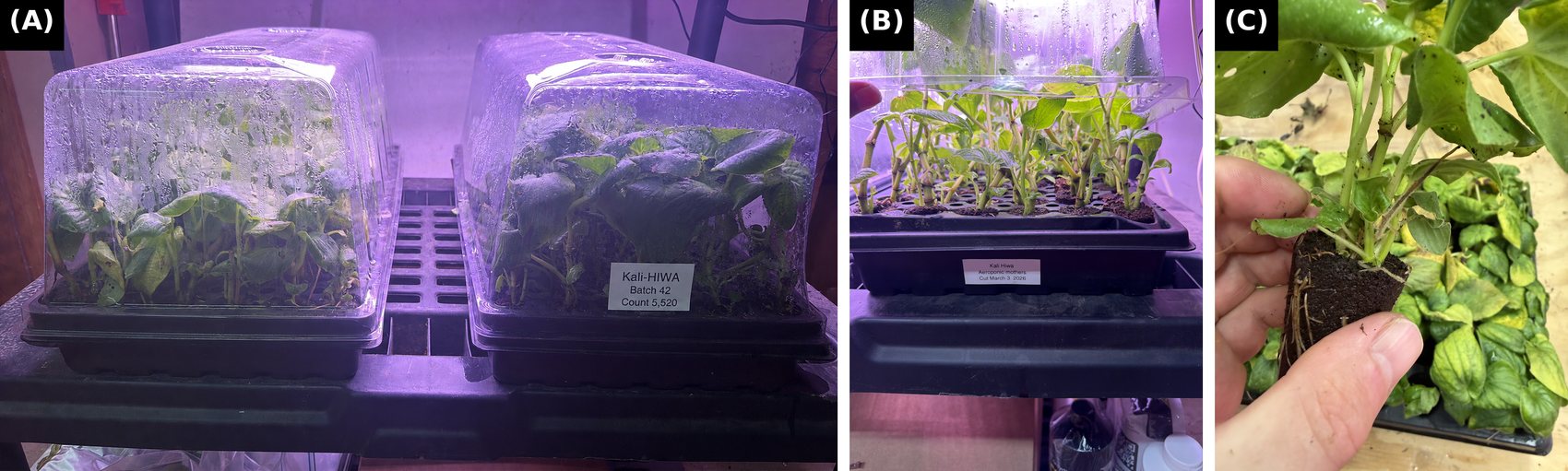
At Day 60 the cycle closes. Second-generation micro-cuttings cut from first-generation propagules rooted at 95.1% (274/288), with 90.3% well-rooted. Against the first generation that is a 1.0-point difference in total rooting with a confidence interval spanning zero (−2.3 to 4.4; Fisher's exact p = 0.68), and a 2.1-point difference in well-rooted classification (p = 0.46). Rot incidence moved from 5 cuttings to 7 — no evidence of pathogen accumulation, and far too small a sample to exclude it.
Supply is not quite self-sufficient. Between 15% and 17% of propagules had not developed a qualifying axillary shoot by Day 60, and 5 to 8 cuttings per cycle came from the original tissue-cultured mothers to hold throughput at 96. A grower sizing capacity should plan that buffer rather than assume full yield from the previous cohort.
What the numbers support, and what they don't
They support three claims. The protocol produces high rooting frequency and dense root architecture. It repeats across seasons — 1.1 percentage points of spread over eight months. And it survives one generational transition without measurable decay.
They do not support a causal claim about air pruning, and this is the limitation that matters most. No cuttings were held on continuous irrigation through Days 20–22. Lateral branching is also simply what an adventitious root system does over that interval. The 100% figures describe what the cohort did; they do not demonstrate an effect. The same applies to every other component — the double collar, the fogger–sprinkler combination, the Bacillus inoculant, the IBA dip, the nutrient schedule. The protocol was evaluated whole. Its parts were not.
The second constraint is the experimental unit. All 96 cuttings in a run shared one reservoir, one chamber and one control loop. A contamination event or thermal excursion would act on the entire cohort at once. For inference about the system the independent unit is the run — three per generation, not 288. Cutting-level statistics are reported because they characterize between-plant variation and because they are what other cutting studies report, but their confidence intervals are narrower than the design warrants.
Third, one cultivar. Kava cultivars differ in stem anatomy, lignification and internode length, and cytokinin response varies by genotype. Nothing here generalizes beyond Kali-Hiwa.
Fourth, scoring was unblinded and by a single assessor. The conditioning endpoint in particular is a qualitative judgment — apical browning "without necrosis extending into the root axis" — and it came back 277 of 277. A perfect score on a subjective endpoint should be read with that in mind.
Fifth, outcomes end at Day 60. Ex vitro acclimatization success, field establishment, growth rate, disease resistance and root yield — the outcomes that decide whether this delivers usable planting material — were not measured.
Against the published benchmarks
Nodal cuttings, South Pacific: 49–60% to establishment over 6–8 weeks. Soft-stem cuttings in peat cubes: 47% at 21 days. Soft-stem cuttings in basic aeroponics: 51% at 14 days. Outdoor air layering: 75.8% at 21 days. This protocol: 96.2% at 20 days.
The gap is large enough that it is unlikely to be a measurement or classification effect alone. It is still a comparison across studies, cultivars, cutting calibre, sites and assessors rather than a controlled experiment — and the two soft-stem figures come from an internally reviewed white paper, not externally peer-reviewed work. These numbers indicate the scale of the difference. They do not measure it.
Why it might work — offered as mechanism, not finding
Aeroponic root zones hold oxygen at the root surface while renewing nutrient delivery continuously, conditions associated with improved adventitious rooting across species. Soft-stem tissue at the first to second node carries high endogenous auxin and active cambial and pericycle tissue, which is the substrate applied IBA acts on; the 2.0–4.0 mm calibre used here sits at the young end of that gradient. The historical prohibition on soft kava stem material was formulated for soil-based nurseries with high microbial load and poor aeration, where such tissue does rot — under sterile, well-aerated, continuously irrigated conditions it rotted in 5 of 288 cuttings.
For air pruning, the container nursery literature proposes that transient apical desiccation arrests elongation and releases lateral primordia from apical control. The root systems here have the morphology that mechanism predicts. That literature is also mixed on the size of the benefit, it concerns containerized substrate rather than an aeroponic root zone, and our design cannot separate the mechanism from ontogeny regardless.
Where this goes next
A factorial trial separating the pulsed conditioning phase from continuous irrigation, run across several independent units in separate rooms. That single addition would establish whether air pruning does what we have assumed and would put the inference on a defensible experimental unit. After that: more cultivars, more generations, blinded or image-based root quantification, field establishment and root yield from propagules produced this way, and an economic comparison against nodal cuttings, peat-cube soft-stem propagation, air layering and conventional tissue culture — which is what a grower choosing between methods actually needs.
Disclosures and conflicts of interest
Tyler Blythe is a co-founder of Kali Kava, which supplied the plant material and offers the Kali-Hiwa cultivar commercially, and of Root of Happiness, which has commercial interests in kava production and sale. The TurboKlone T48 units were purchased at commercial retail price; no compensation, discount or equipment loan was received from the manufacturer or from the suppliers of any other named product. The authors declare that these affiliations did not influence the design, conduct, analysis or interpretation of the study.
References
Lebot, V. The Origin and Distribution of Kava. Canberra Anthropology 1995, 18, 20–33. https://doi.org/10.1080/03149099509508407
Lebot, V.; McKenna, D.J.; Johnston, E.; Zheng, Q.Y.; McKern, D. Morphological, Phytochemical, and Genetic Variation in Hawaiian Cultivars of 'Awa (Kava, Piper methysticum, Piperaceae). Economic Botany 1999, 53, 407–418. https://doi.org/10.1007/BF02866720
Davis, R.I.; Brown, J.F. Kava (Piper methysticum) in the South Pacific: Its Importance, Methods of Cultivation, Cultivars, Diseases and Pests; ACIAR Technical Reports Series No. 46; Australian Centre for International Agricultural Research: Canberra, ACT, Australia, 1999; ISBN 1-86320-257-9.
Prasad, R.; Tyagi, A.P.; Taylor, M. Regeneration and Establishment of Whole Plants from Kava (Piper methysticum Forster) Meristems in Tissue Culture. South Pacific Journal of Natural and Applied Sciences 2008, 26, 39–44. https://doi.org/10.1071/SP08006
Zhang, Z.; Zhao, L.; Chen, X.; Zheng, X. Successful Micropropagation Protocol of Piper methysticum. Biologia Plantarum 2008, 52, 110–112. https://doi.org/10.1007/s10535-008-0020-9
Dushimimana, C.; Magomere, T.; Mulatya, J.; Vandenabeele, J.; Olubayo, F.; Smagghe, G.; Werbrouck, S.P.O. Variation of Morphological Traits and Quality Indices of Micropropagated Melia volkensii Gürke Clones before Field Planting. Forests 2022, 13, 337. https://doi.org/10.3390/f13020337
Mohammed, M.; Munir, M.; Ghazzawy, H.S. Design and Evaluation of a Smart Ex Vitro Acclimatization System for Tissue Culture Plantlets. Agronomy 2023, 13, 78. https://doi.org/10.3390/agronomy13010078
Blythe, T.; Bowman, J.; Masifilo, M. Soft-Stem Propagation of Piper methysticum Using Peat-Based Media and Aeroponic Cloning Systems; American Kava Association Technical White Paper No. 1, Version 1.0; American Kava Association: Las Vegas, NV, USA, 2026. https://www.americankavaassociation.org/study/aeroponic-cloning-peat
Blythe, T.; Bowman, J.; McDonnell, B. Outdoor Nursery Propagation of Kava (Piper methysticum) by Air Layering; American Kava Association Technical White Paper No. 4, Version 1.1; American Kava Association: Las Vegas, NV, USA, 2026. https://www.americankavaassociation.org/study/air-layering-florida
Scaltrito, E.; Cristiano, G.; Sdao, A.E.; Gruda, N.S.; Loconsole, D.; De Lucia, B. Influence of Water Spraying Intervals and Indole-3-Butyric Acid Concentrations on Salvia Rooted Cuttings Quality in a Closed Aeroponics System. Scientia Horticulturae 2024, 337, 113452. https://doi.org/10.1016/j.scienta.2024.113452
Lykokanellos, G.; Lagogiannis, I.; Liopa-Tsakalidi, A.; Salachas, G. Effects of Growth Regulators and Propagation Systems on the Growth of Lavender (Lavandula angustifolia) Cuttings. Horticulturae 2026, 12, 246. https://doi.org/10.3390/horticulturae12020246
Naseem, M.T.; Zaman, W. Root-Zone Engineering in Closed Soilless Horticulture: From Plant Physiology to Sensor-Guided Control. Horticulturae 2026, 12, 1088. https://doi.org/10.3390/horticulturae12091088
Buckseth, T.; Singh, R.K.; Tiwari, J.K.; Sharma, A.K.; Singh, S.; Chakrabarti, S.K. A Novel Sustainable Aeroponic System for Healthy Seed Potato Production in India—An Update. Indian Journal of Agricultural Sciences 2020, 90, 243–248. https://doi.org/10.56093/ijas.v90i2.98995
Tunio, M.H.; Gao, J.; Shaikh, S.A.; Lakhiar, I.A.; Qureshi, W.A.; Solangi, K.A.; Chandio, F.A. Potato Production in Aeroponics: An Emerging Food Growing System in Sustainable Agriculture for Food Security. Chilean Journal of Agricultural Research 2020, 80, 118–132. https://doi.org/10.4067/S0718-58392020000100118
Zhang, M.; Montanez, C.; Pearson, B.J.; Li, Y.; Chen, J. Aeroponics Enables Consistent Cutting Propagation of Kratom (Mitragyna speciosa): Impacts of Photoperiod, Cultivar, and Rooting Hormone. Frontiers in Plant Science 2025, 16, 1650327. https://doi.org/10.3389/fpls.2025.1650327
Weingarten, M.; Mattson, N.; Grab, H. Evaluating Propagation Techniques for Cannabis sativa L. Cultivation: A Comparative Analysis of Soilless Methods and Aeroponic Parameters. Plants 2024, 13, 1256. https://doi.org/10.3390/plants13091256
Elsysy, M.; Einhorn, T.C. Air-Pruning Containers Modify Root and Scion Growth and Alter Resource Allocation of Bench-Grafted Apple Plants. Horticulturae 2022, 8, 797. https://doi.org/10.3390/horticulturae8090797
Gilman, E.F.; Paz, M.; Harchick, C. Effect of Eight Container Types and Root Pruning During Nursery Production on Root Architecture of Acer rubrum. Arboriculture & Urban Forestry 2016, 42, 31–45. https://doi.org/10.48044/jauf.2016.003
Pokhrel, A.; Albrecht, U. Evaluation of Different Container Types on Root Structure and Performance of Nursery-Grown Citrus Plants. HortScience 2024, 59, 1056–1064. https://doi.org/10.21273/HORTSCI17979-24
Seliem, M.K.; Abdalla, N.; El-Mahrouk, M.E. Cytokinin Potentials on In Vitro Shoot Proliferation and Subsequent Rooting of Agave sisalana Perr. Syn. Horticulturae 2025, 11, 929. https://doi.org/10.3390/horticulturae11080929
Dewir, Y.H.; Nurmansyah; Naidoo, Y.; Teixeira da Silva, J.A. Thidiazuron-Induced Abnormalities in Plant Tissue Cultures. Plant Cell Reports 2018, 37, 1451–1470. https://doi.org/10.1007/s00299-018-2326-1
Rogers, A.; Dietz, K.-J.; Gifford, M.L.; Lunn, J.E. The Importance of Independent Replication of Treatments in Plant Science. Journal of Experimental Botany 2021, 72, 5270–5274. https://doi.org/10.1093/jxb/erab268
Casler, M.D. Fundamentals of Experimental Design: Guidelines for Designing Successful Experiments. Agronomy Journal 2015, 107, 692–705. https://doi.org/10.2134/agronj2013.0114
Seethepalli, A.; Dhakal, K.; Griffiths, M.; Guo, H.; Freschet, G.T.; York, L.M. RhizoVision Explorer: Open-Source Software for Root Image Analysis and Measurement Standardization. AoB PLANTS 2021, 13, plab056. https://doi.org/10.1093/aobpla/plab056
Druege, U.; Hilo, A.; Pérez-Pérez, J.M.; Klopotek, Y.; Acosta, M.; Shahinnia, F.; Zerche, S.; Franken, P.; Hajirezaei, M.R. Molecular and Physiological Control of Adventitious Rooting in Cuttings: Phytohormone Action Meets Resource Allocation. Annals of Botany 2019, 123, 929–949. https://doi.org/10.1093/aob/mcy234
Liu, P.; Zhang, S.; Wang, X.; Du, Y.; He, Q.; Zhang, Y.; Shen, L.; Hu, H.; Zhang, G.; Li, X. Adventitious Root Formation in Cuttings: Insights from Arabidopsis and Prospects for Woody Plants. Biomolecules 2025, 15, 1089. https://doi.org/10.3390/biom15081089
Secretariat of the Pacific Community. Pacific Kava: A Producer's Guide; Secretariat of the Pacific Community: Suva, Fiji Islands, 2001; ISBN 982-203-810-0.
Cite This
Blythe, T.; Bowman, J.; Masifilo, M. High Efficiency Aeroponic Rooting and Root Architecture Engineering of Soft-Stem Kava Micro-Cuttings Derived from Tissue-Cultured Plants. American Kava Association Journal Article No. 8; American Kava Association: Las Vegas, NV, USA, 2026.
Supporting Data and Access
Published by: American Kava Association, Las Vegas, NV, USA Version: 1.0 · September 2026 Study period: First-generation runs initiated 4 August 2025, 1 December 2025 and 6 April 2026; rooting scored at Day 20, root architecture at Day 30, and second-generation harvest at Day 60 of each run, with the final assessment completed July 2026 Trial site: Kali Kava Research Facility, Sacramento, California, USA — indoor controlled-environment aeroponic mist chamber Status: Reviewed by the authors and internally audited for statistical and citation accuracy; released as a preprint pending external peer review. Not externally peer reviewed.
The discussion published on this page is complete as an argument. It states the method, the numbers, the limitations and the conflicts of interest, and it is free to read, cite and disagree with. The records underneath it are held for the Association’s members.
Access to those records is open to stakeholders in the American kava growing industry — growers with at least one acre in production and a contract in place for the purchase of licensed planting material.
The reason is simply who this organization is. The American Kava Association is funded by its members and operates for their benefit, and its members are American kava farmers with land, capital and years committed to the crop. This work is self-funded: it was paid for out of working farms, to answer questions those farms were already facing. What the people who paid for it are owed is a working advantage in their own fields. So we publish the findings in full, limitations included, so the work can be judged on its merits — and we keep the underlying files inside the membership that produced them. That is a decision about who we are resourced to serve, not a judgement on anyone who asks.
Researchers and institutions interested in working with this material are welcome to propose a funded collaboration. That is the basis on which the Association can extend it, and we would rather say yes to a properly resourced study than no to a request.
Write to admin@americankavaassociation.org to enquire.