Overview
Kava propagation has always depended on thick woody nodal cuttings taken when a plant is harvested, which ties the supply of planting material to the harvest cycle and destroys the mother plant. This study tested whether soft, herbaceous stems collected during routine pruning can be rooted instead — in peat rooting cubes and in an aeroponic cloner — across two American-grown noble cultivars and two independent trials. Both systems rooted roughly half of all cuttings, matching the published benchmark for traditional nodal propagation while shortening the rooting period to 14–21 days.
Abstract
Kava (Piper methysticum) propagation is constrained by its reliance on traditional large woody nodal cuttings collected at harvest. Although micropropagation is possible, its high cost, technical demands, contamination risk, and acclimatization challenges limit large-scale adoption. Here, we present the first documented evaluation of soft-stem cuttings combined with peat-based rooting cubes and aeroponic cloning as accessible, low-cost alternatives for rapid, sustainable kava propagation. Cuttings from routine pruning were evaluated after 21 d in peat cubes and 14 d in aeroponics. Rooting success was similar across trials, averaging 47% in peat cubes and 51% in aeroponics, with slightly lower mortality in aeroponics. Chi-square analysis confirmed no significant difference in rooting success between methods. Aeroponic systems shorten the rooting period, with slightly higher survival and similar rooting vigor; peat cubes offer logistical advantages for vertical scalability and may lessen transplant shock. Soft-stem propagation methods in kava cultivation decouple propagation from harvest cycles, reduce damage to mother plants, and enable a continuous and renewable source of planting material. This study describes two practical and scalable alternatives to traditional nodal propagation and tissue culture, directly addressing the chronic planting material shortage that limits kava production.
Key Findings
- Soft-stem cuttings — the pliable, non-woody material taken during routine pruning — rooted at 47% in peat cubes and 51% in aeroponics, inside the 49–60% range published for traditional woody nodal cuttings.
- Aeroponics rooted cuttings in 14 days against 21 days for peat cubes, with mortality of 32% versus 37%.
- None of those differences were statistically significant (all p > 0.44). The study was underpowered — post-hoc power of 0.08–0.12 — to resolve gaps of 4–7 percentage points.
- Two independent trials run 12 weeks apart produced near-identical outcome distributions (all χ² < 0.3, df = 3, p > 0.96), so the result is reproducible rather than one lucky batch.
- Every rooted cutting that was transplanted survived 30 days in nursery soil and continued growing.
- Because the material comes from pruning rather than harvest, propagation is decoupled from the harvest cycle and no mother plant is destroyed.
The bottleneck is planting material, not demand
Kava is a sterile, clonally propagated crop. Every plant in the ground descends from a cutting off another plant, which means the ceiling on how fast the crop can expand is set entirely by how fast growers can make new plants. Global demand has climbed steadily on the strength of kava's anxiolytic and social properties; supply has not kept pace. The result is chronic shortage and price volatility across Vanuatu, Fiji and Tonga, and the same constraint now facing American growers trying to build a domestic supply base.
The conventional answer is the nodal cutting: a woody stem segment 3–5 cm in diameter with at least one viable node, taken from a mature plant. It works, but it carries three costs. It is slow, taking several weeks to root even under optimal tropical conditions. It is variable — Davis and Brown reported 49–60% success for middle and apical nodes, with seasonal swings of up to 19 percentage points. And critically, it is tied to harvest: the stems come off the plant when the plant comes out of the ground, so a grower cannot produce planting material year-round without sacrificing crop.
Tissue culture is the other established route. Zhang et al. and Prasad et al. both demonstrated kava regeneration from nodal explants and apical meristems on Murashige and Skoog media. Technically it scales. Practically it has not been adopted, because sterile laboratory infrastructure is expensive, and — as the authors note from their own micropropagation work — survival of explants through acclimatization to field conditions is often below 50%. That puts the real cost at roughly $3–6 per field-acclimated plantlet against under $1 for a conventional nodal cutting — prohibitive for Pacific Island nurseries and impractical for most American operations.
The question — If the constraint is that planting material can only be made at harvest, can it instead be made from what growers already cut off and discard every few weeks — the soft green tips removed during routine pruning?
Why soft stems were off the table
The reason nobody had tried this is not that nobody thought of it. It is that the authoritative guidance told growers not to. Pacific Kava: A Producer's Guide, published by the Secretariat of the Pacific Community, instructs growers to avoid the soft upper portion of the stem because it is prone to rot and does not easily develop roots and shoots, recommending the woody mid-portion instead for its rot resistance.
That advice was written for soil-based nurseries — ambient microbial load, limited aeration, real pathogen pressure. Under those conditions it is almost certainly correct. But because it was treated as settled, soft-stem material was excluded from both grower practice and experimental investigation, and the exclusion propagated into the scientific literature. A thorough review turned up no prior attempt at soft-stem kava propagation in peat cube media, and no prior report of aeroponic kava propagation at all. Soft-stem cuttings for medicinal plants and aeroponic cloning for cannabis are both well documented horticultural techniques; their application to P. methysticum was not.
What was tested
Plant material
A soft-stem cutting was defined operationally: a herbaceous, pliable stem segment with minimal lignification that bends to roughly 90° without snapping. Selected material was 0.5–1.0 cm in diameter, non-senescing, taken from the mid-canopy, and included the first to third node below the apical meristem, at full turgor and dark green.
Material came from two American-grown noble cultivars, Kali-ISA and Kali-Hiwa, from stock plants in a greenhouse at the Kali Kava Research Facility in Sacramento, California. The first trial was cut in early August 2025 at 7:00 p.m. from four-year-old Kali-ISA and three-year-old Kali-Hiwa specimens. The second trial was cut in early November 2025 from the same stock plants.
Cutting preparation
- Excised with a sterilized scalpel at a 45° angle, approximately 1 cm below the basal node to maximize cambial exposure, and trimmed to 1 cm above the uppermost distal node.
- Each cutting 7–12 cm long, containing two nodes.
- Leaf blades removed at the lamina–petiole junction with the petiole left intact, to cut water loss while preserving the axillary and interpetiolar meristems that drive regrowth.
- Basal 2 cm dipped in Clonex® Rooting Gel (0.31% indole-3-butyric acid with micronutrients), fully submerged, then inserted into the propagation system immediately without drying, so hormone uptake stayed consistent.
The two systems
Peat cubes. Root Riot® cubes — a proprietary sphagnum peat and plant-binder blend, manufacturer-specified at 0.10 g/cm³ bulk density, 65–70% water holding capacity, pH stabilized at 6.0–6.5, biodegradable and free of added fertilizer. Each cube sat in a standard 50-cell propagation tray under a 7.5″ humidity dome.
Aeroponics. A TurboKlone® T48: 48 neoprene collars suspended over a 16-litre aerated reservoir, with high-pressure misting jets running continuously 24 hours a day and an integrated circulation fan maintaining reservoir oxygenation. Collars were sterilized before use — swabbed with 70% ethanol, rinsed in sterile reverse-osmosis water, soaked 15 minutes in 10% commercial bleach, then rinsed three more times.
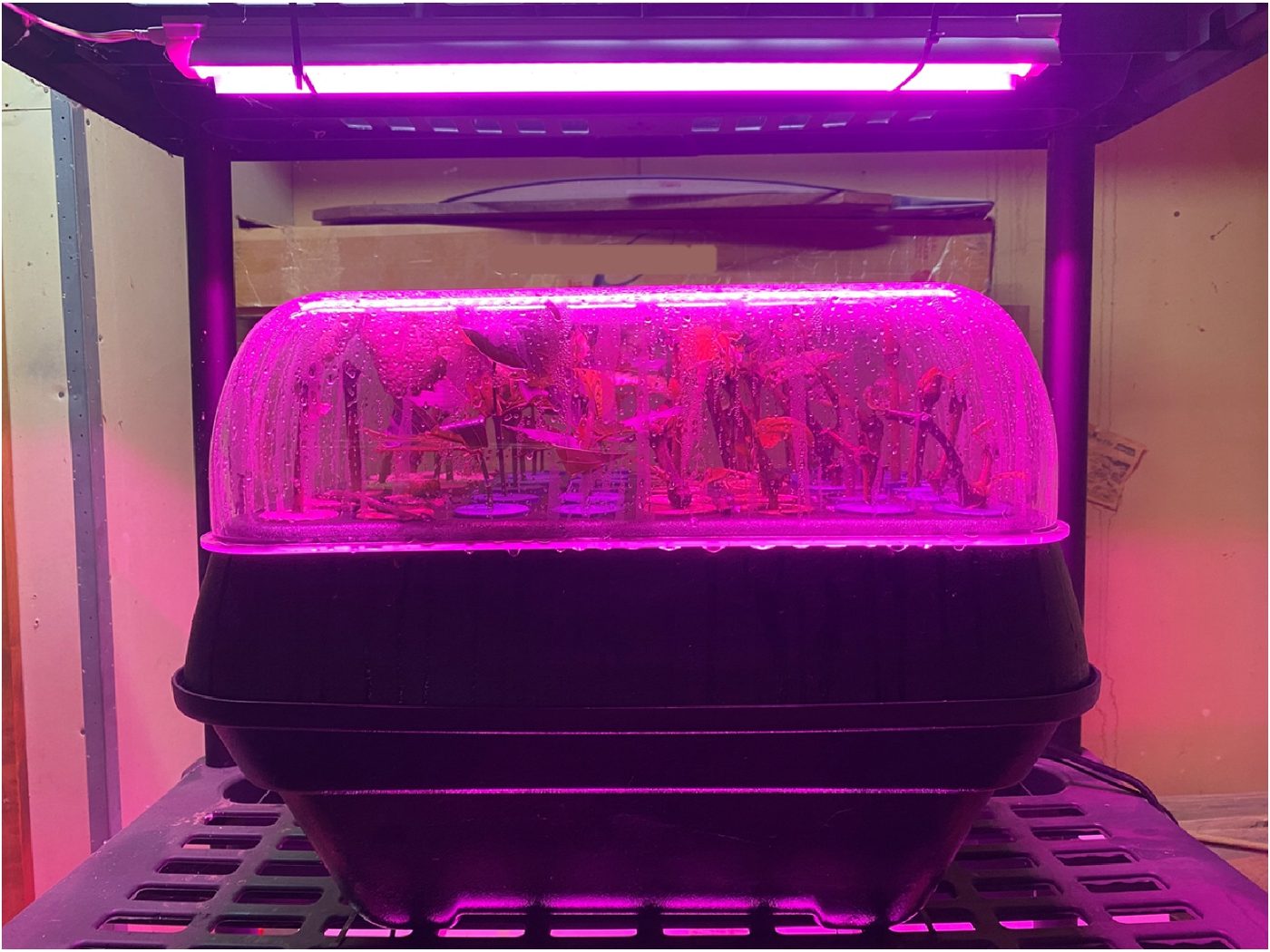
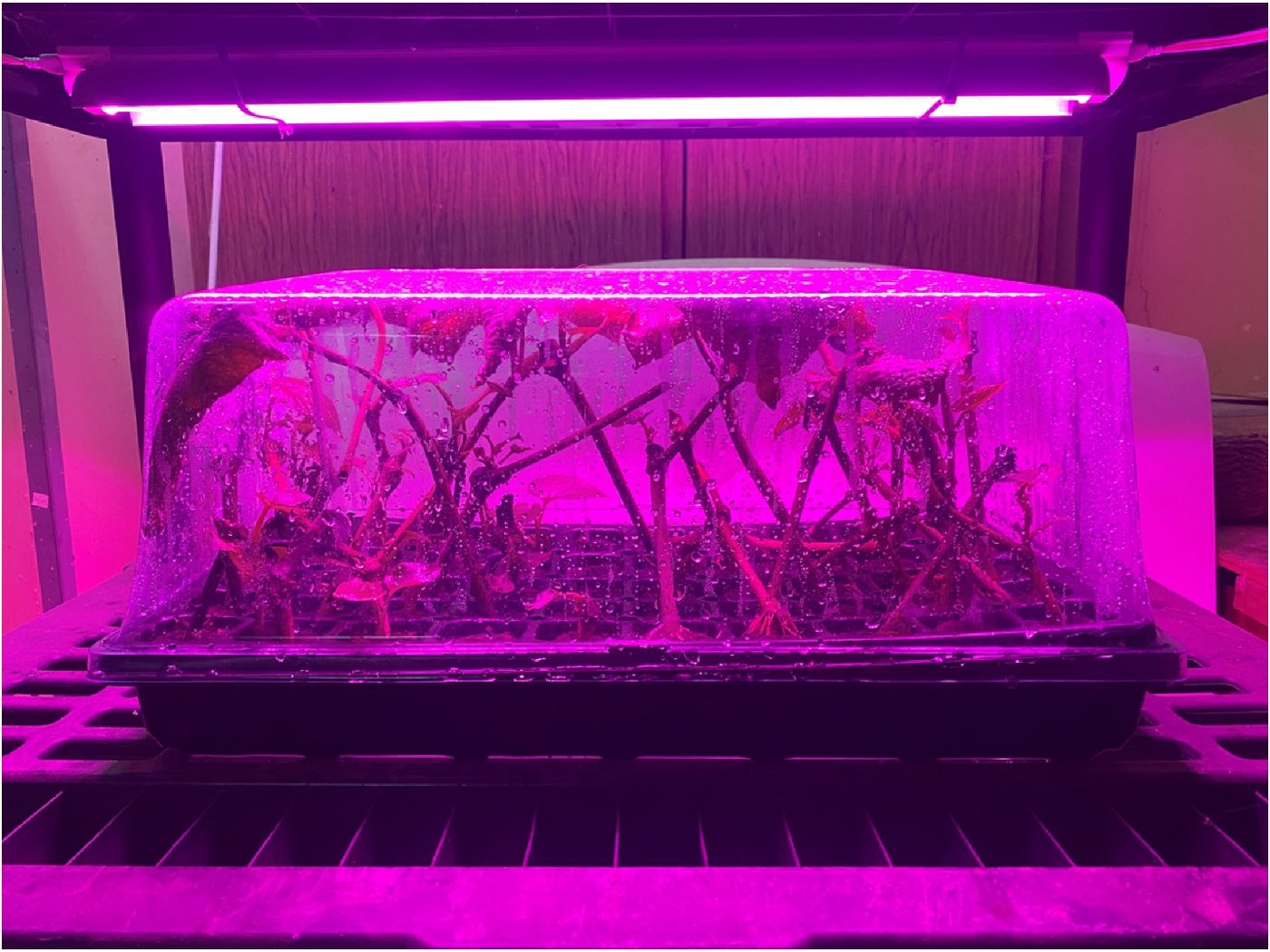
Figures 10 and 11. The two propagation systems as run in the trials — the TurboKlone® T48 aeroponic cloner and the peat cube tray, both under humidity domes.
Inputs and environment
Both systems received the same biological and nutritional inputs: a Bacillus amyloliquefaciens root inoculant (HydroGuard®, Botanicare®, 1.0 × 10⁴ CFU/mL) at 2 mL per gallon to improve root vigour, and a balanced commercial nutrient solution (Kind Grow, 2-2-4, Botanicare®) at 2 mL per gallon. The solution ran at pH 6.2, 152 ppm total dissolved solids and 319 µS/cm electrical conductivity, and was left unchanged for the full duration of both the 14-day aeroponic and 21-day peat cube runs.
Greenhouse ambient temperature under the humidity dome ranged 23–30 °C. The aeroponic reservoir was held at 18 ± 1 °C with a mounted fan promoting air circulation and root-zone oxygenation, specifically to suppress microbial and fungal growth — the failure mode that historically killed soft-stem material.
Scoring
Cuttings were assessed at 21 days (peat cubes) and 14 days (aeroponics) and sorted into four classes. Basal stem diameter was measured with digital calipers (±0.1 mm) so that cutting thickness could be related to outcome.
Outcome classification
- Rotted — Complete tissue decay and necrosis
- Alive, No Roots — Green, turgid stem — possibly with new leaves — but no root emergence
- Poorly Rooted — At least one visible root, under 2 cm of total root length
- Well-Rooted — At least three roots, each ≥ 2 cm, forming a robust branching system
Rooting success is reported throughout as Poorly Rooted + Well-Rooted. Mortality is the Rotted class.
Results
Both cultivars propagated successfully under both systems. In the first trial, peat cubes returned 48% rooting for Kali-ISA and 40% for Kali-Hiwa; aeroponics returned 56% and 50%, with well-rooted proportions of 36% and 28% respectively. Mortality was lower in aeroponics than in peat cubes, and the two cultivars behaved similarly under both systems.
Table 1. Rooting outcomes for Kali-ISA and Kali-Hiwa in peat cubes and aeroponic cloners — initial greenhouse trial.
- Rotted — Peat, Kali-ISA (n = 25): 9 (36%) · Peat, Kali-Hiwa (n = 25): 10 (40%) · Aero, Kali-ISA (n = 18): 5 (28%) · Aero, Kali-Hiwa (n = 18): 6 (33%)
- Alive, No Roots — Peat, Kali-ISA (n = 25): 4 (16%) · Peat, Kali-Hiwa (n = 25): 5 (20%) · Aero, Kali-ISA (n = 18): 3 (17%) · Aero, Kali-Hiwa (n = 18): 3 (17%)
- Poorly Rooted — Peat, Kali-ISA (n = 25): 3 (12%) · Peat, Kali-Hiwa (n = 25): 3 (12%) · Aero, Kali-ISA (n = 18): 4 (22%) · Aero, Kali-Hiwa (n = 18): 3 (17%)
- Well-Rooted — Peat, Kali-ISA (n = 25): 9 (36%) · Peat, Kali-Hiwa (n = 25): 7 (28%) · Aero, Kali-ISA (n = 18): 6 (33%) · Aero, Kali-Hiwa (n = 18): 6 (33%)
- Total Rooted — Peat, Kali-ISA (n = 25): 12 (48%) · Peat, Kali-Hiwa (n = 25): 10 (40%) · Aero, Kali-ISA (n = 18): 10 (56%) · Aero, Kali-Hiwa (n = 18): 9 (50%)
A second, fully independent trial was run 12 weeks later using the identical protocol, the same stock plants and the same sample sizes. It landed in the same place: 56% and 44% rooting in peat cubes for Kali-ISA and Kali-Hiwa, 50% for both cultivars in aeroponics, and mortality again lower under mist (33% across both cultivars) than in peat (32–40%).
Table 2. Rooting outcomes — temporal replication trial, conducted 12 weeks after the first.
- Rotted — Peat, Kali-ISA (n = 25): 8 (32%) · Peat, Kali-Hiwa (n = 25): 10 (40%) · Aero, Kali-ISA (n = 18): 6 (33%) · Aero, Kali-Hiwa (n = 18): 6 (33%)
- Alive, No Roots — Peat, Kali-ISA (n = 25): 4 (16%) · Peat, Kali-Hiwa (n = 25): 4 (16%) · Aero, Kali-ISA (n = 18): 3 (17%) · Aero, Kali-Hiwa (n = 18): 3 (17%)
- Poorly Rooted — Peat, Kali-ISA (n = 25): 4 (16%) · Peat, Kali-Hiwa (n = 25): 4 (16%) · Aero, Kali-ISA (n = 18): 3 (17%) · Aero, Kali-Hiwa (n = 18): 2 (11%)
- Well-Rooted — Peat, Kali-ISA (n = 25): 10 (40%) · Peat, Kali-Hiwa (n = 25): 7 (28%) · Aero, Kali-ISA (n = 18): 6 (33%) · Aero, Kali-Hiwa (n = 18): 7 (38%)
- Total Rooted — Peat, Kali-ISA (n = 25): 14 (56%) · Peat, Kali-Hiwa (n = 25): 11 (44%) · Aero, Kali-ISA (n = 18): 9 (50%) · Aero, Kali-Hiwa (n = 18): 9 (50%)
Pooling both trials gives 172 cuttings — 100 in peat cubes, 72 in aeroponics. Overall rooting averaged 47% in peat cubes and 51% in aeroponics. Well-rooted cuttings made up 33% of the peat population and 35% of the aeroponic one. Mortality was modestly lower under mist: 32% against 37%.
Table 3. Pooled rooting outcomes across both independent trials.
- Rotted — Peat, Kali-ISA (n = 50): 17 (34%) · Peat, Kali-Hiwa (n = 50): 20 (40%) · Aero, Kali-ISA (n = 36): 11 (31%) · Aero, Kali-Hiwa (n = 36): 12 (33%) · All Peat (n = 100): 37 (37%) · All Aero (n = 72): 23 (32%)
- Alive, No Roots — Peat, Kali-ISA (n = 50): 8 (16%) · Peat, Kali-Hiwa (n = 50): 9 (18%) · Aero, Kali-ISA (n = 36): 6 (17%) · Aero, Kali-Hiwa (n = 36): 6 (17%) · All Peat (n = 100): 17 (17%) · All Aero (n = 72): 12 (17%)
- Poorly Rooted — Peat, Kali-ISA (n = 50): 7 (14%) · Peat, Kali-Hiwa (n = 50): 7 (14%) · Aero, Kali-ISA (n = 36): 7 (19%) · Aero, Kali-Hiwa (n = 36): 5 (14%) · All Peat (n = 100): 14 (14%) · All Aero (n = 72): 12 (17%)
- Well-Rooted — Peat, Kali-ISA (n = 50): 19 (38%) · Peat, Kali-Hiwa (n = 50): 14 (28%) · Aero, Kali-ISA (n = 36): 12 (33%) · Aero, Kali-Hiwa (n = 36): 13 (36%) · All Peat (n = 100): 33 (33%) · All Aero (n = 72): 25 (35%)
- Total Rooted — Peat, Kali-ISA (n = 50): 26 (52%) · Peat, Kali-Hiwa (n = 50): 21 (42%) · Aero, Kali-ISA (n = 36): 19 (53%) · Aero, Kali-Hiwa (n = 36): 18 (50%) · All Peat (n = 100): 47 (47%) · All Aero (n = 72): 37 (51%)
Counts (%), calculated as (category count / group total) × 100 and rounded to the nearest whole number. Pooled from two independent trials conducted 12 weeks apart.
Figure 1. Rooting outcomes in peat cubes by cultivar (pooled data)
Figure 1.
- Rotted — Kali-ISA: 34 % · Kali-Hiwa: 40 %
- Alive, No Roots — Kali-ISA: 16 % · Kali-Hiwa: 18 %
- Poorly Rooted — Kali-ISA: 14 % · Kali-Hiwa: 14 %
- Well-Rooted — Kali-ISA: 38 % · Kali-Hiwa: 28 %
- Total Rooted — Kali-ISA: 52 % · Kali-Hiwa: 42 %
Percentage of cuttings in each outcome class, peat cubes, both trials pooled (n = 50 per cultivar).
Figure 2. Rooting outcomes in aeroponics by cultivar (pooled data)
Figure 2.
- Rotted — Kali-ISA: 31 % · Kali-Hiwa: 33 %
- Alive, No Roots — Kali-ISA: 17 % · Kali-Hiwa: 17 %
- Poorly Rooted — Kali-ISA: 19 % · Kali-Hiwa: 14 %
- Well-Rooted — Kali-ISA: 33 % · Kali-Hiwa: 36 %
- Total Rooted — Kali-ISA: 53 % · Kali-Hiwa: 50 %
Percentage of cuttings in each outcome class, aeroponic cloner, both trials pooled (n = 36 per cultivar).
What the rooted material looked like
The classification thresholds are easier to trust when you can see them applied. The best aeroponic clones produced root systems around 10 cm long inside 14 days — dense, white and branching, well past the three-roots-at-2-cm bar for Well-Rooted.
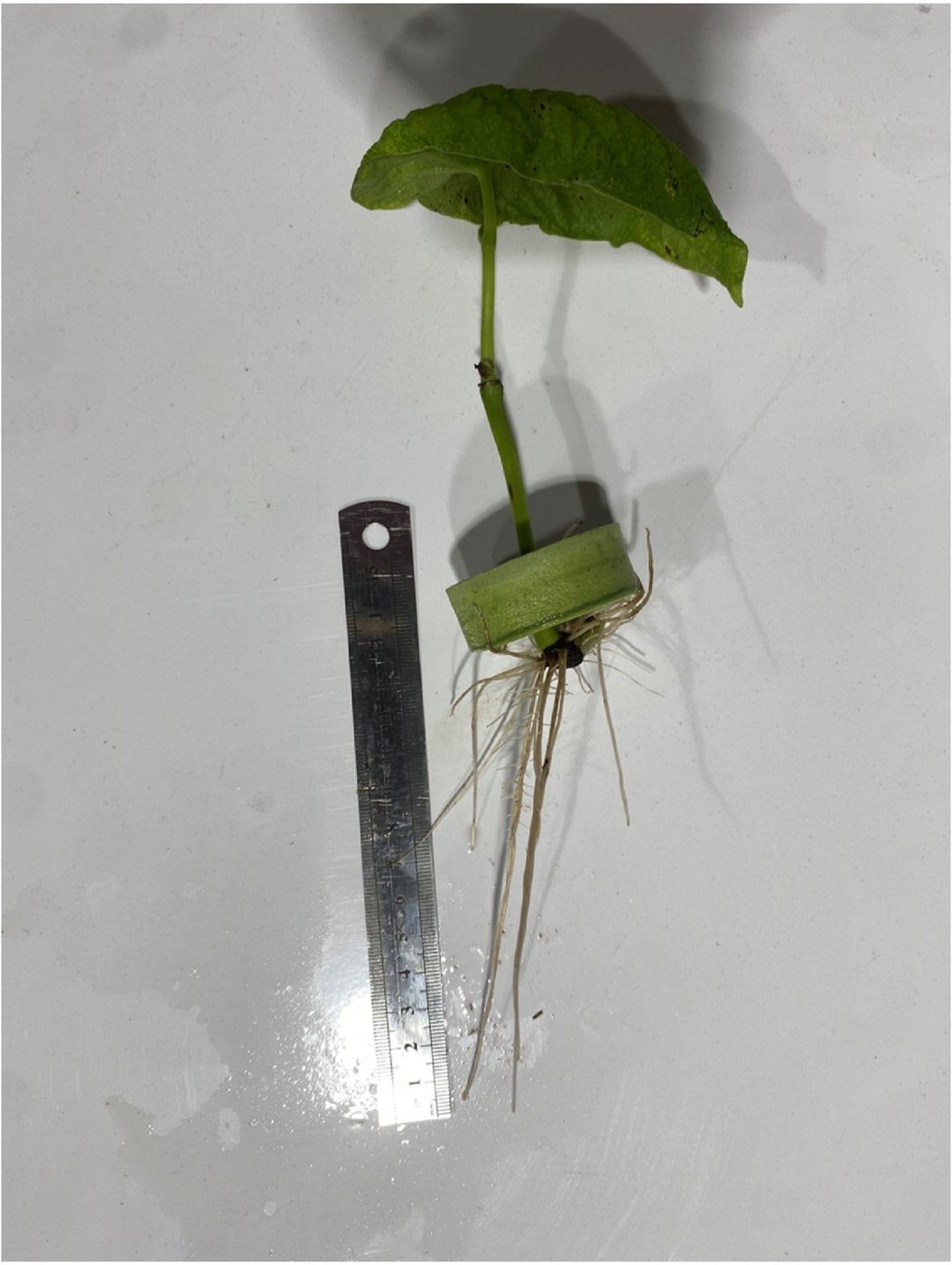
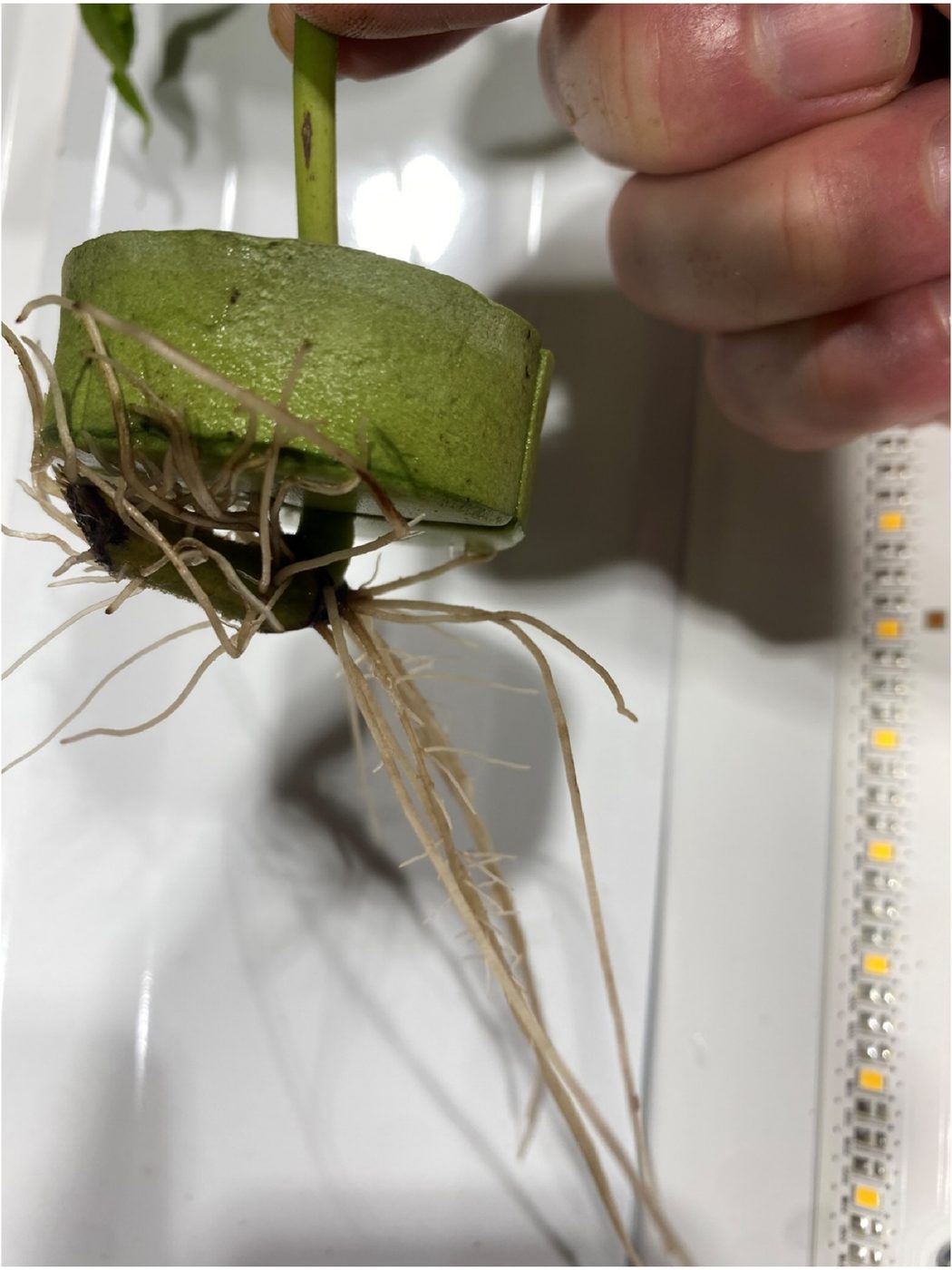
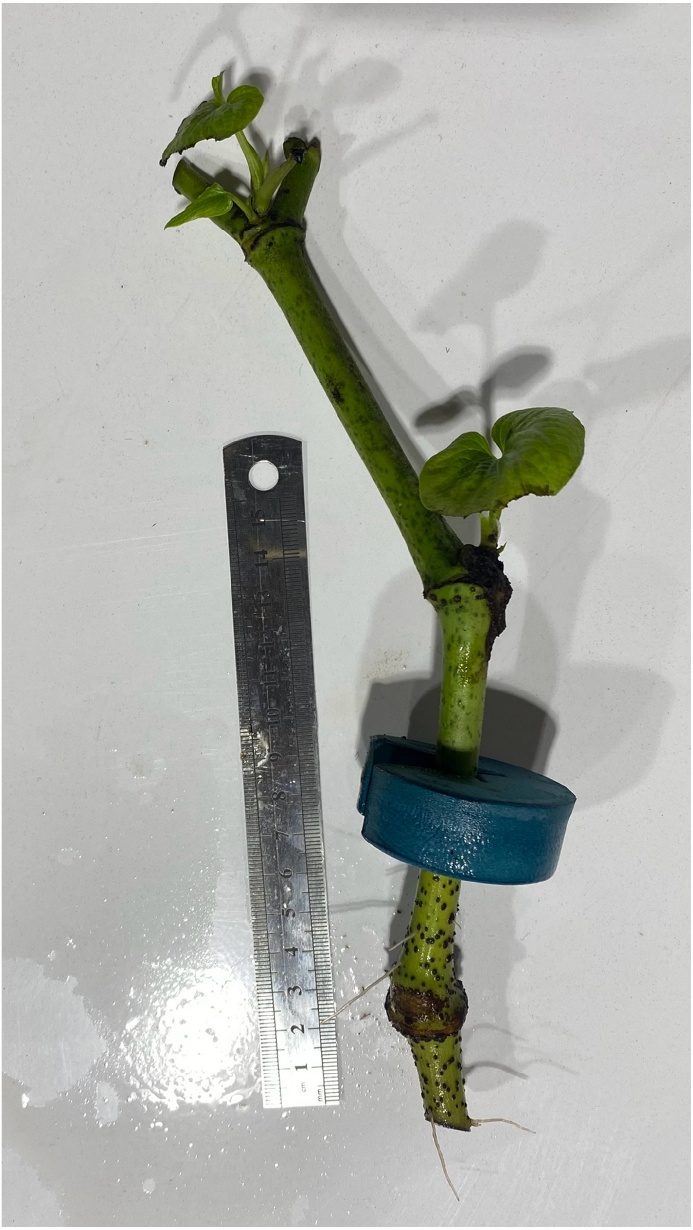
Figures 3–5. Aeroponic outcomes. Left and centre: Well-Rooted Kali-Hiwa clones, with roots measured against a steel rule. Right: a representative Poorly Rooted cutting — roots present, but sparse and short.
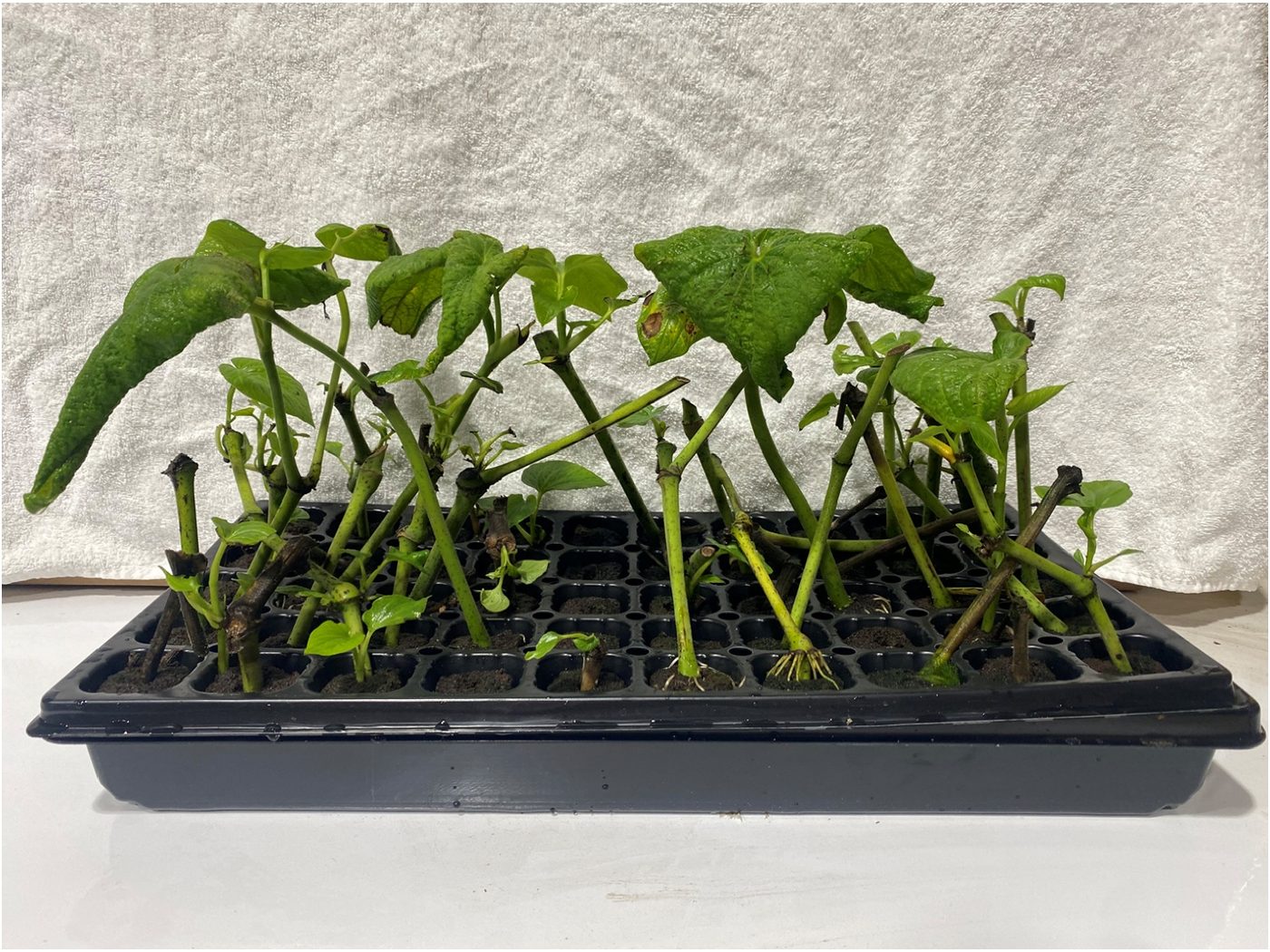
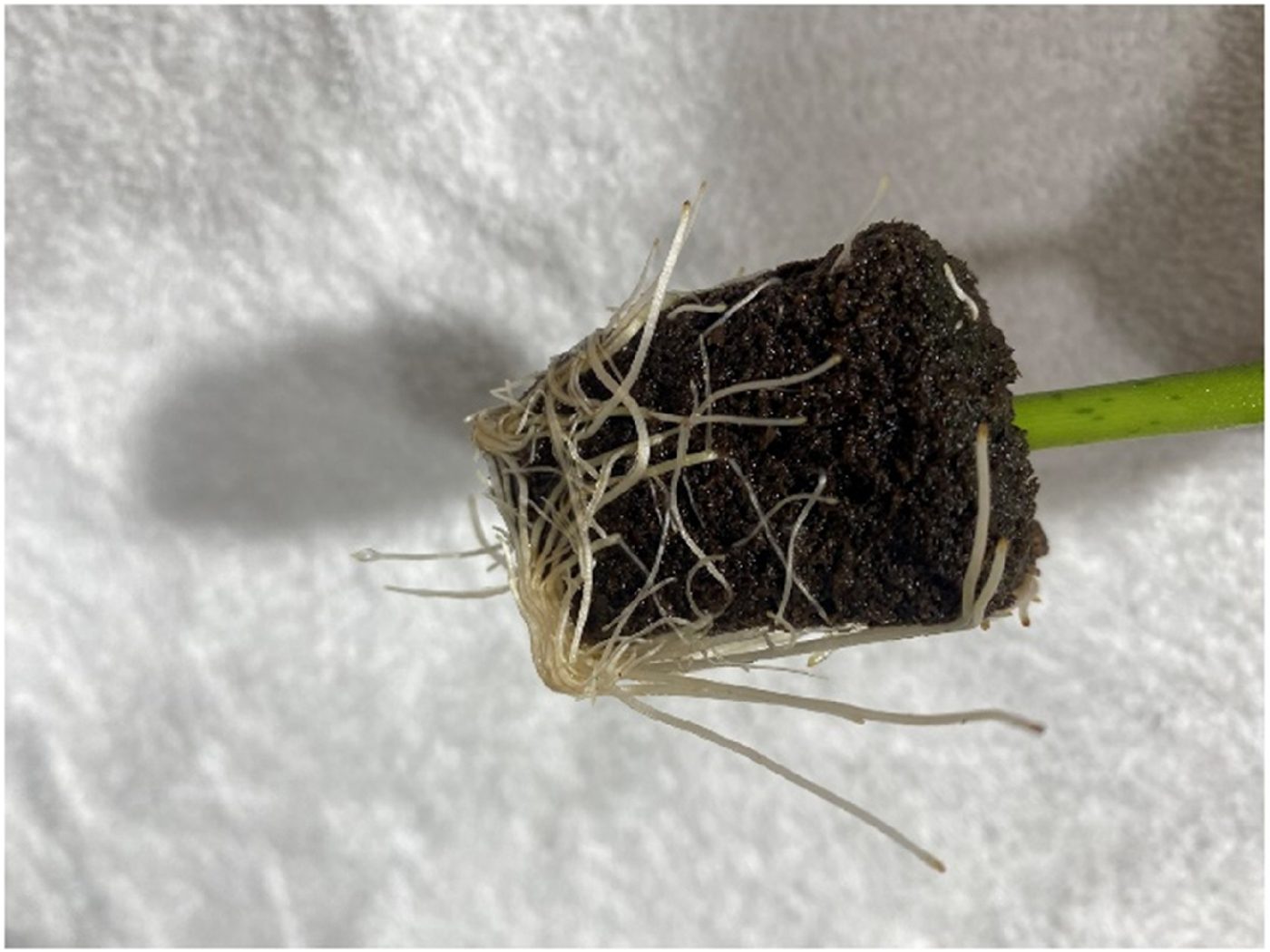
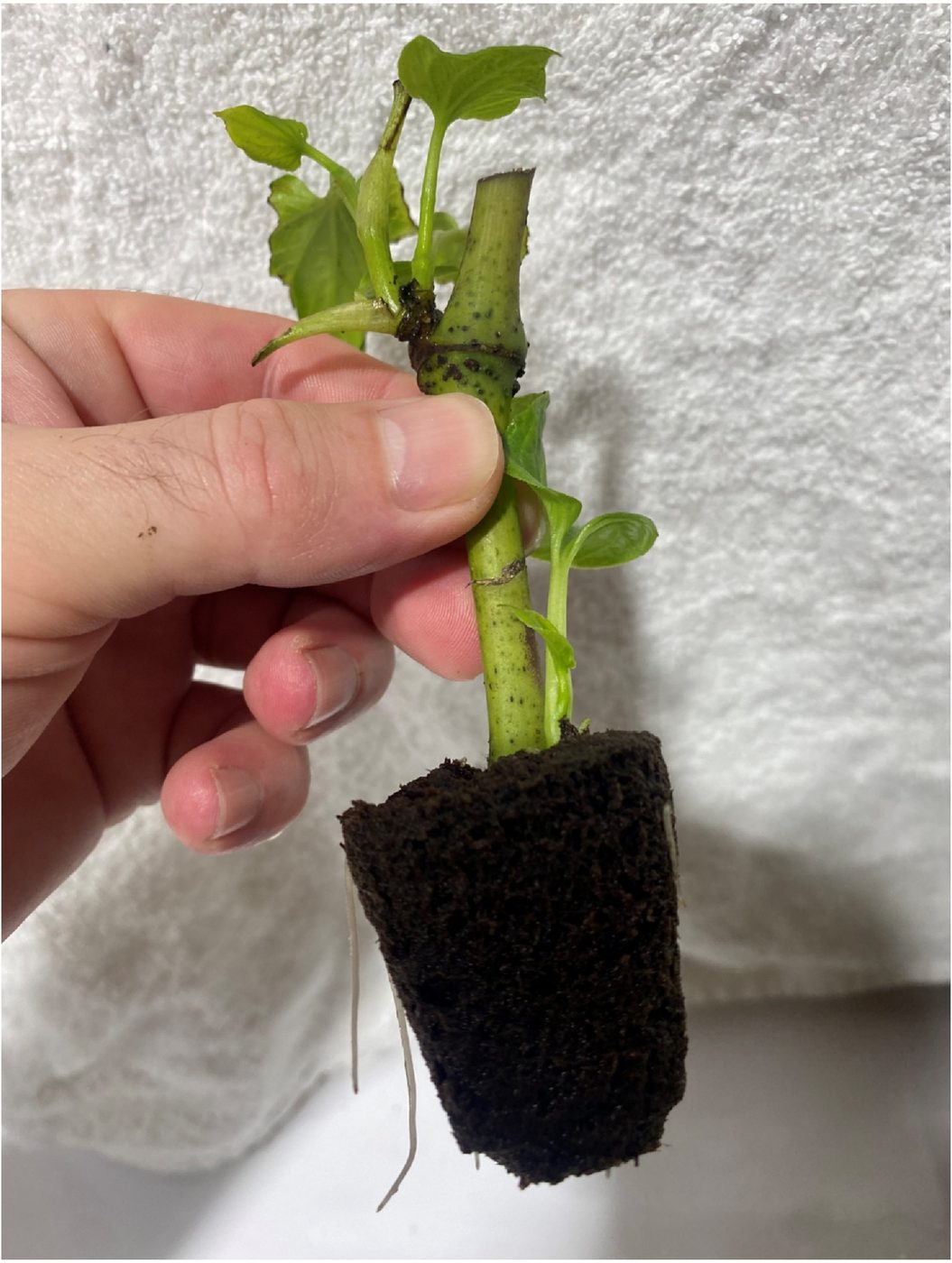
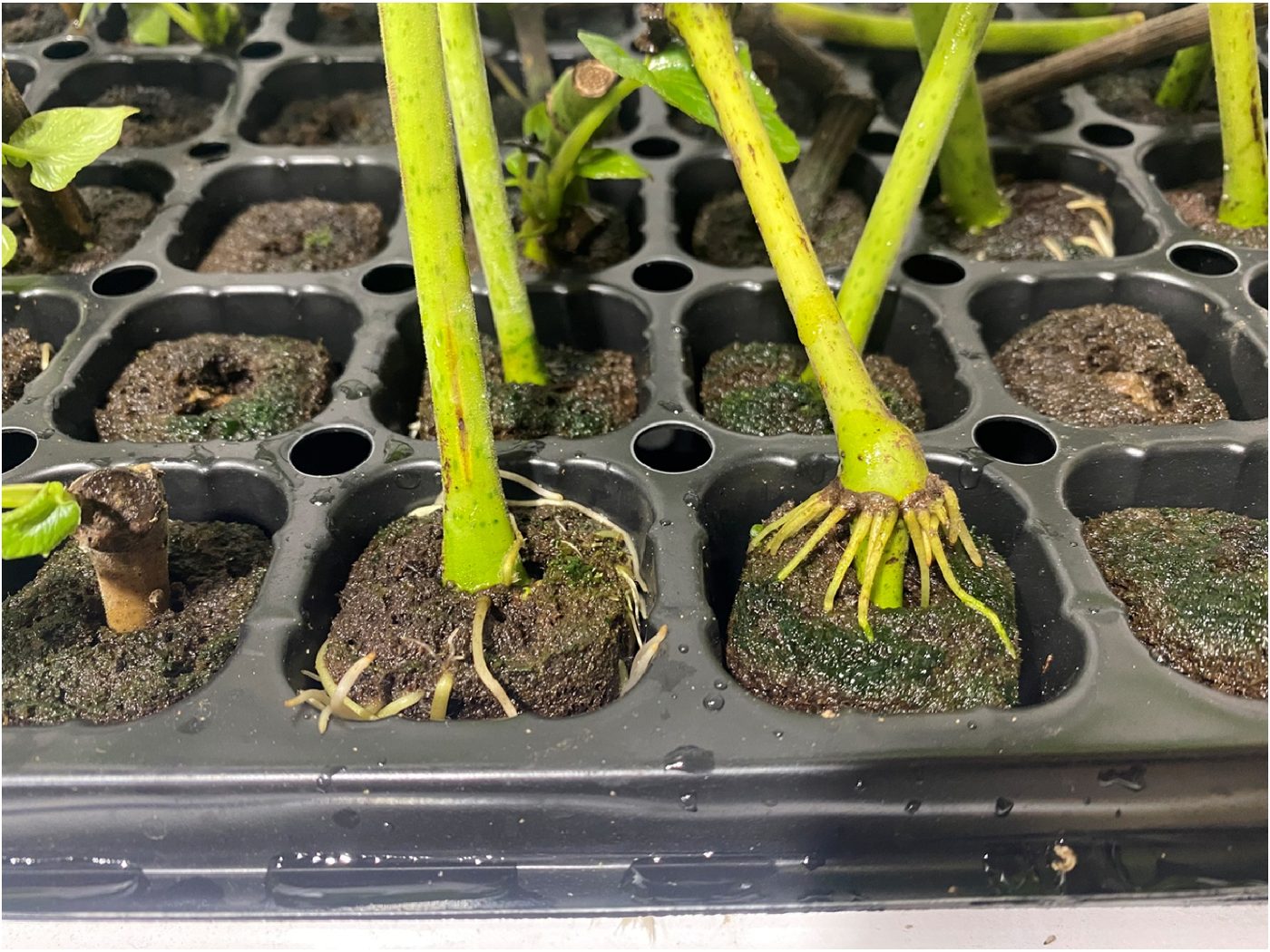
Figures 6–9. Peat cube outcomes. A full tray of cuttings pushing new foliage; roots breaking through the sides of the cubes; a single Well-Rooted cube; and a Poorly Rooted example for contrast.
Transplant survival — Every cutting classed Poorly Rooted or Well-Rooted was transplanted into nursery soil media and monitored for 30 days under controlled greenhouse conditions. All of them survived and continued vegetative growth. Even the sparse root systems that only just cleared the Poorly Rooted threshold were sufficient to establish in soil — which matters, because it means the 47–51% figure is a usable-plant rate, not just a root-initiation rate.
What the statistics can and cannot say
Analyses were run in Python 3.12 using SciPy's chi2_contingency, with Yates' continuity correction applied to 2 × 2 tables, α = 0.05, and no correction for multiple comparisons. Expected frequencies were checked for validity throughout.
The reproducibility result is the strong one. Outcome distributions did not differ between the two trials for any treatment group — all χ² below 0.3 on four-category distributions, all p above 0.96. That is about as clean a replication as a study this size can produce, and it justifies pooling.
The comparative results are the weak ones, and the paper is careful to say so. Aeroponics beat peat cubes on rooting (51% vs 47%) and on mortality (32% vs 37%), and Kali-ISA beat Kali-Hiwa (52% vs 45%), but none of those differences reached significance, and post-hoc power was 0.08–0.12. A study with power that low cannot distinguish a real 4–7 point advantage from noise. The honest conclusion is that both systems work, not that either one wins.
Table 4. Chi-square tests of rooting success, mortality and trial reproducibility, with post-hoc power.
- Method → rooting success (peat 47/53 vs aero 37/35) — χ²: 0.17 · df: 1 · p: 0.679 · Power (1−β): 0.09 · Interpretation: No significant difference; low power
- Cultivar → rooting success (ISA 45/41 vs Hiwa 39/47) — χ²: 0.58 · df: 1 · p: 0.446 · Power (1−β): 0.12 · Interpretation: No significant difference; low power
- Method → mortality (peat 37/63 vs aero 23/49) — χ²: 0.27 · df: 1 · p: 0.600 · Power (1−β): 0.08 · Interpretation: No significant difference; low power
- Reproducibility — peat cubes, Kali-ISA — χ²: 0.24 · df: 3 · p: 0.972 · Power (1−β): ~0.15–0.25 · Interpretation: High reproducibility
- Reproducibility — aeroponics, Kali-ISA — χ²: 0.23 · df: 3 · p: 0.972 · Power (1−β): ~0.15–0.25 · Interpretation: High reproducibility
Reproducibility power is approximate, assuming a small effect size (Cohen's w ≈ 0.1) given the near-identical distributions. Values below 0.20 indicate low power to detect the small differences observed.
What this changes
The limit was the environment, not the tissue
This is the finding with the longest reach. Soft-stem material was written off because it rots — but it rots in soil-based nurseries with poor aeration and high ambient pathogen load. Remove hypoxia and disease pressure with a sanitized substrate and continuous aeration, and the same tissue roots at rates comparable to woody cuttings. The prohibition in the extension literature turns out to describe a property of the propagation environment, not a property of the plant.
Younger tissue roots faster, and possibly thinner is better
Adventitious rooting is driven by auxins — indole-3-butyric acid and indole-3-acetic acid — stimulating division and differentiation in cambial and pericycle tissue. Younger herbaceous tissue carries higher endogenous auxin and greater meristematic activity, which is the plausible mechanism behind the faster rooting seen here in both systems.
An unexpected preliminary trend fell out of the caliper measurements: thinner cuttings around 0.5 cm rooted more often than thicker ones above 0.8 cm. That directly contradicts the traditional assumption that thicker cuttings perform better because they carry more carbohydrate reserve and more rot-resistant woody tissue. The authors hypothesize that thinner soft-stem tissue has higher meristematic activity, greater cambial responsiveness, or a more favourable auxin-to-abscisic-acid ratio — and that under traditional soil conditions this advantage was invisible, because such material simply rotted before it could show it. The observation was not statistically analyzed and remains qualitative; it is flagged as a target for a properly powered follow-up.
Choosing between the two systems
Aeroponics buys speed and disease control, and costs capital and technical attention. The TurboKlone® platform delivers consistent misting and air circulation, which is very likely what held rotting down — but the unit price and physical footprint cap how far it scales. One untested idea the authors raise is the double collar: two cuttings per collar, doubling throughput per unit area, borrowing directly from the traditional Pacific practice of planting several stems per hole to improve the odds.
Peat cubes are slower to initiate roots but they are cheap, space-efficient and stackable. The arithmetic is worth stating plainly: a standard 6 × 2 ft shelving unit holds up to 12 trays of 50 cubes — 600 cuttings in about 12 square feet of nursery floor. Roots formed in a solid substrate may also experience less transplant shock on field establishment. For low-resource settings and Pacific Island nurseries, where affordability and logistics matter more than a week of propagation time, peat cubes are likely the better fit.
- 600 — Cuttings per 6 × 2 ft shelving unit, peat cube system
- 14 d — Aeroponic rooting period
- 21 d — Peat cube rooting period
- 3–4 wk — Traditional nodal cutting rooting period
Propagation comes off the harvest clock
The structural contribution is not the rooting percentage — it is where the material comes from. Soft-stem cuttings are collected during routine pruning, an operation growers already perform. That makes propagation continuous and renewable rather than an event that happens once, at harvest, at the cost of the mother plant. For a crop whose expansion has been throttled by planting material scarcity for decades, decoupling the two cycles is the point.
Limitations
- Two cultivars only. Kali-ISA and Kali-Hiwa are both American-grown noble varieties. Kava's genetic and morphological diversity is substantial, and nothing here shows the response generalizes across it.
- Modest sample size. N = 172 pooled (100 peat, 72 aeroponic), which is what drove the low statistical power.
- Short horizon. Outcomes were assessed over a 14–21 day propagation window plus 30 days of nursery establishment. Long-term field survival, growth rate, pest and disease resistance, and eventual root yield are all unexamined. The claim that this alleviates planting-material shortage remains a projection until multi-year field data exists.
- Controlled conditions. Everything ran in a greenhouse. Open-field nurseries in the Pacific face humidity swings, temperature fluctuation and pathogen pressure that this setup did not reproduce.
- Unevaluated risks. Microbial contamination, pest pressure and systemic disease transmission in high-density propagation were not assessed — and high-density propagation is exactly where those risks concentrate.
- The thin-stem trend is anecdotal. Interesting, plausible, and not statistically tested.
Where this goes next
- Expand testing across Pacific and American germplasm collections to see whether the soft-stem response holds across kava's genetic diversity.
- Field trials for long-term survival, disease resistance, growth rate and root yield — the test of whether rooting success translates into agronomic and economic viability.
- Controlled work on cutting morphology: long- versus short-internode cultivars, stem diameter, tissue maturity, to turn the thin-stem observation into a selection criterion.
- A priori power analysis sized to an agronomically meaningful effect (on the order of a 10–15 point difference in rooting success), so future trials can actually resolve what this one could not.
- Optimization of nutrient composition, pH, alternative media blends (coir, perlite, vermiculite) and plant growth regulator type and concentration.
- System design: double-collar cloners, modular low-cost builds, and IoT-enabled environmental control and monitoring of the kind described by Tang et al.
- A full cost-benefit analysis across aeroponics, peat cubes, nodal cuttings and tissue culture — capital, labour and survival rates together — to give growers a basis for choosing.
Why it matters for American kava
American kava cultivation is young enough that its planting material constraint is still forming. This work suggests it does not have to inherit the Pacific's version of that constraint. A grower with a shelf, a tray of peat cubes and a humidity dome can turn a routine pruning into six hundred new plants without touching a mother plant — and a grower with a cloner can do it a week faster. Both routes are inexpensive relative to tissue culture, both are reproducible across batches, and both produce material that establishes reliably in soil.
From a sustainability standpoint the two methods are complementary. Aeroponics reduces water and nutrient input per cutting relative to conventional soil propagation; peat cubes reduce the land footprint of the nursery. Together they reduce pressure on mother plants, which is where the ecological and the cultural arguments converge — kava stock represents years of accumulated care, and a propagation method that does not consume it is worth having.
References
- Lebot, V. The origin and distribution of kava. Canberra Anthropol. 18(1–2), 20–33. https://doi.org/10.1080/03149099509508407
- Davis, R. I.; Brown, J. F. Kava (Piper methysticum) in the South Pacific: its importance, methods of cultivation, cultivars, diseases and pests. ACIAR Technical Reports Series No. 46, Australian Centre for International Agricultural Research.
- Zhang, Z.; Zhao, L.; Chen, X.; Zheng, X. (2008). Successful micropropagation protocol of Piper methysticum. Biol. Plant. 52(1), 110–112. https://doi.org/10.1007/s10535-008-0020-9
- Prasad, R.; Tyagi, A. P.; Taylor, M. Regeneration and establishment of whole plants from kava (Piper methysticum Forster) meristems in tissue culture. S. Pac. J. Nat. Appl. Sci. 26(1), 39–44. https://doi.org/10.1071/SP08006
- Secretariat of the Pacific Community. Pacific kava: a producer's guide. Secretariat of the Pacific Community.
- Waman, A. A.; Smitha, G. R.; Bohra, P. (2019). Clonal propagation of medicinal and aromatic plants through stem cuttings for promoting their cultivation and conservation. Curr. Agri. Res. J. 7(2), 122–138.
- Weingarten, M.; Mattson, N.; Grab, H. Evaluating propagation techniques for Cannabis sativa L. cultivation: a comparative analysis of soilless methods and aeroponic parameters. Plants (Basel) 13(9), 1256. https://doi.org/10.3390/plants13091256
- Tang, L.; Syed, A.; Otho, A. R.; Junejo, A. R.; Tunio, M. H.; Hao, L.; et al. (2024). Intelligent rapid asexual propagation technology — a novel aeroponics propagation approach. Agronomy 14(10), 2289. https://doi.org/10.3390/agronomy14102289
- Lebot, V. Morphological, phytochemical and genetic variation in Hawaiian cultivars of 'awa (kava, Piper methysticum, Piperaceae). Econ. Bot. 53(4), 407–418. https://doi.org/10.1007/BF02866720
Cite This
Blythe, T.; Bowman, J.; Masifilo, M. Soft-Stem Propagation of Piper methysticum Using Peat-Based Media and Aeroponic Cloning Systems. American Kava Association Technical White Paper No. 1; American Kava Association: Las Vegas, NV, USA, 2026.
Supporting Data and Access
The records behind this paper are the rooting-outcome counts underlying Tables 1–3, the chi-square analyses in Table 4, and the caliper measurements relating stem diameter to outcome.
The discussion published on this page is complete as an argument. It states the method, the numbers, the limitations and the conflicts of interest, and it is free to read, cite and disagree with. The records underneath it are held for the Association’s members.
Access to those records is open to stakeholders in the American kava growing industry — growers with at least one acre in production and a contract in place for the purchase of licensed planting material.
The reason is simply who this organization is. The American Kava Association is funded by its members and operates for their benefit, and its members are American kava farmers with land, capital and years committed to the crop. This work is self-funded: it was paid for out of working farms, to answer questions those farms were already facing. What the people who paid for it are owed is a working advantage in their own fields. So we publish the findings in full, limitations included, so the work can be judged on its merits — and we keep the underlying files inside the membership that produced them. That is a decision about who we are resourced to serve, not a judgement on anyone who asks.
Researchers and institutions interested in working with this material are welcome to propose a funded collaboration. That is the basis on which the Association can extend it, and we would rather say yes to a properly resourced study than no to a request.
Write to admin@americankavaassociation.org to enquire.